
Analytical Validation of oncoReveal CDx as a FDA approved, Pan-Cancer Solid Tumor IVD Assay
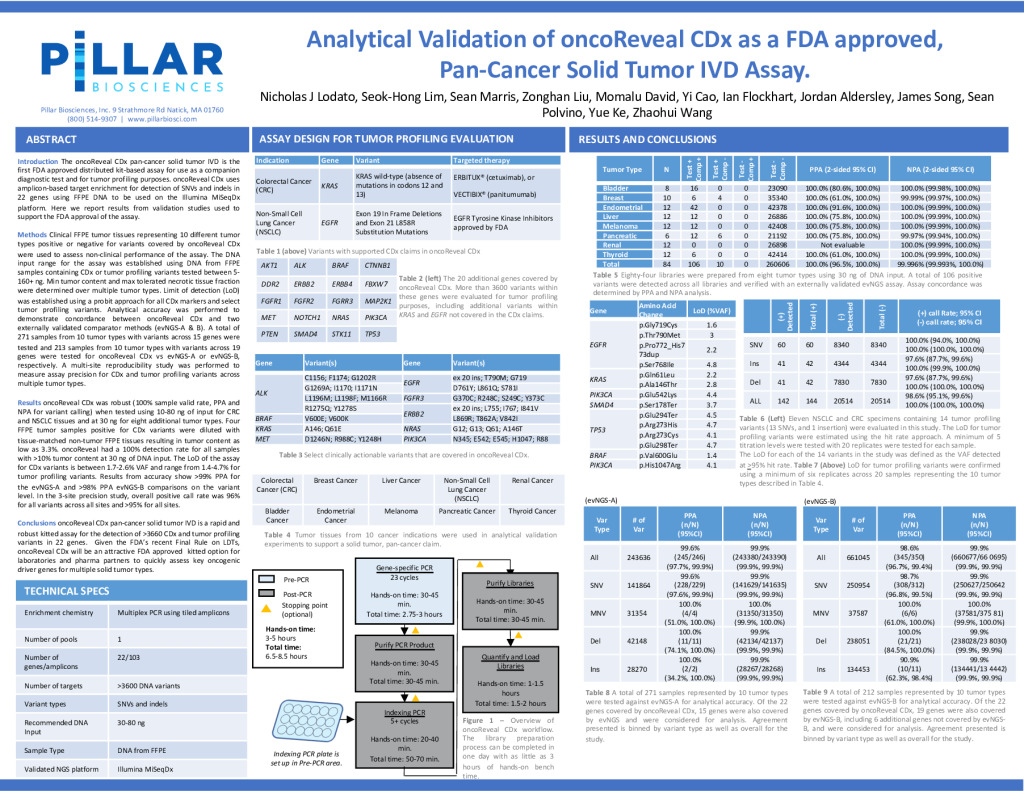
oncoReveal® CDx is the first FDA-approved distributed, kit-based NGS assay for both companion diagnostic use and pan-cancer tumor profiling, covering more than 3,600 SNV and indel targets across 22 genes from FFPE DNA on the Illumina MiSeqDx. Validation spanned 10 tumor types and addressed DNA input range, minimum tumor content, necrosis tolerance, limit of detection by probit analysis, accuracy against two externally validated NGS comparators, and a three-site reproducibility study. The assay achieved 100% positive and 99.996% negative percent agreement at 30 ng input, with valid results down to 3.3% tumor content.
Automation of oncoReveal Solid Tumor 22 Gene Panel and the Illumina TruSight Oncology 500 DNA/RNA
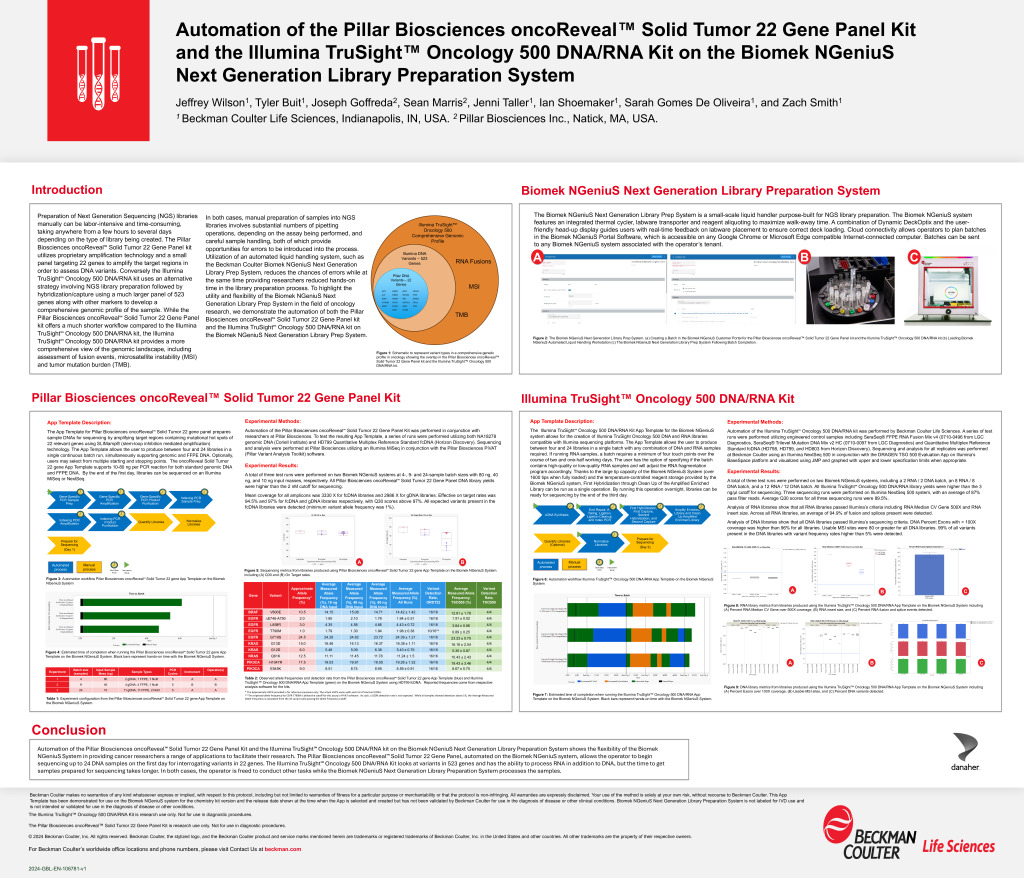
Beckman Coulter Life Sciences automated both Pillar’s oncoReveal® Solid Tumor 22 Gene Panel and Illumina’s TruSight Oncology 500 DNA/RNA kit on the Biomek NGeniuS library preparation system to reduce manual pipetting and hands-on time. Three test runs per assay used engineered controls including Horizon Discovery fcDNA and SeraSeq® reference standards, sequenced on Illumina MiSeq and NextSeq 500 and analyzed with PiVAT® and DRAGEN. The Pillar panel reached sequencing by the end of day one at batch sizes from 4 to 24 samples, while the 523-gene TSO500 workflow ran into day three.
JAK2 Exon 12-15, CALR and MPL Essential MPN NGS Panel
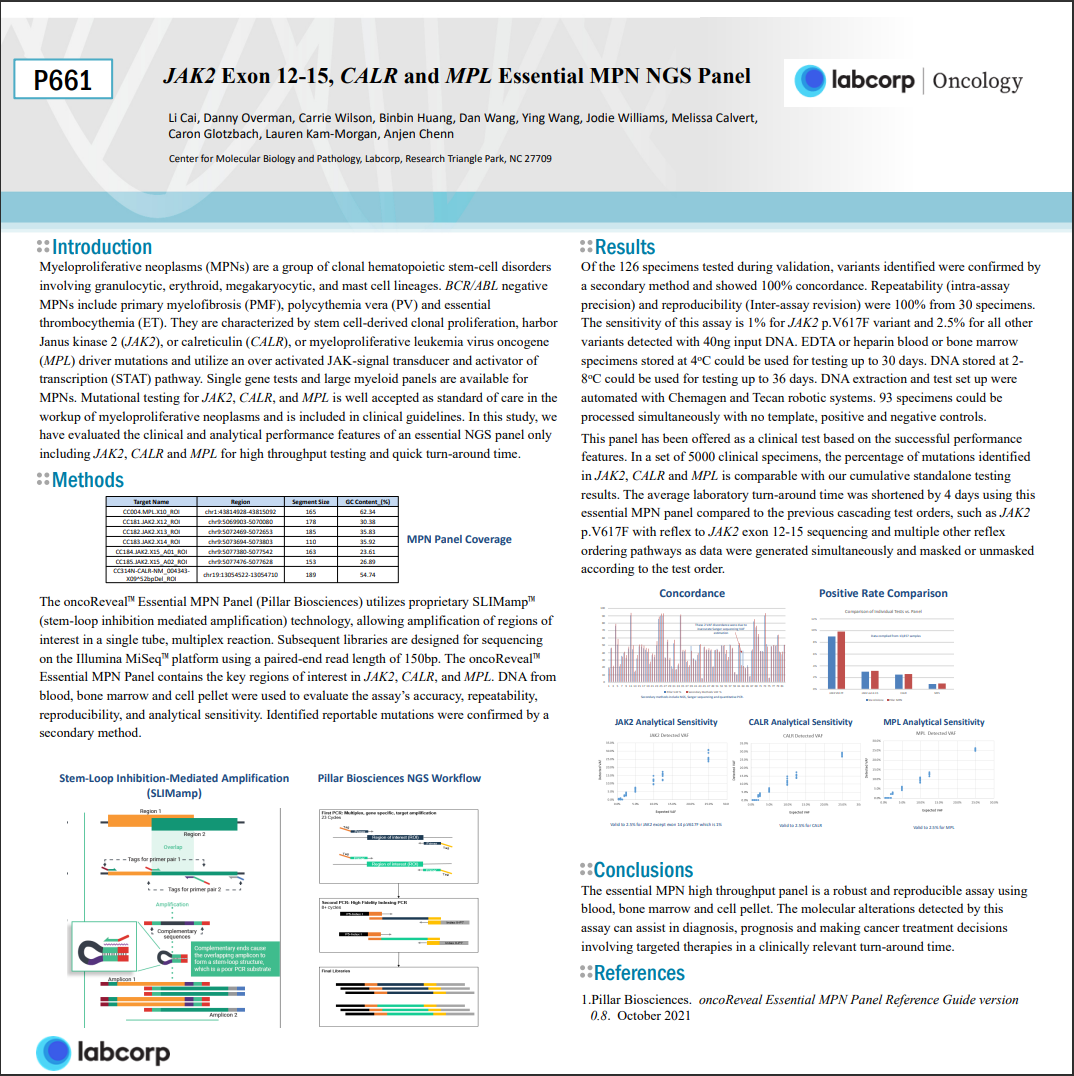
Labcorp’s Center for Molecular Biology and Pathology validated Pillar’s oncoReveal® Essential MPN Panel — a single-tube SLIMamp® assay covering JAK2 exons 12–15, CALR, and MPL — as a high-throughput clinical test for BCR/ABL-negative myeloproliferative neoplasms including polycythemia vera, essential thrombocythemia, and primary myelofibrosis. Across 126 blood, bone marrow, and cell pellet specimens every reportable mutation was confirmed by a secondary method, giving 100% concordance, with 100% repeatability and reproducibility over 30 specimens. The panel is now offered clinically, and average laboratory turnaround shortened by four days versus cascading reflex orders.
Highly Accurate and Automated (RUO) NGS Assays for Efficient Localized LBx and TBx Testing in Oncology
Event Name: AMP 2023
TBC
Localized (RUO) NGS Methylation Testing to Help Inform BioPharma Clinical Trials and Improve Oncology Research
Event Name: AMP 2023
TBC
Looking Deeper into HRD to Inform PARP Inhibitor Therapy: Building the Case for NGS Methylation Testing
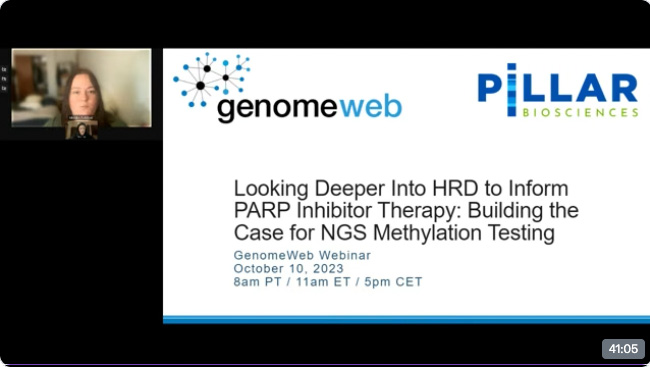
Publishing Entity: GenomeWeb | Precision Medicine Online
Minimizing Sample Failure Rates for Challenging Clinical Tumor Samples
Publication Source: The Journal of Molecular Diagnostics
TBC
Automation of the Pillar Biosciences oncoReveal Solid Tumor 22 gene panel (ORST22) on the Biomek NGeniuS Next Generation Library Prep System
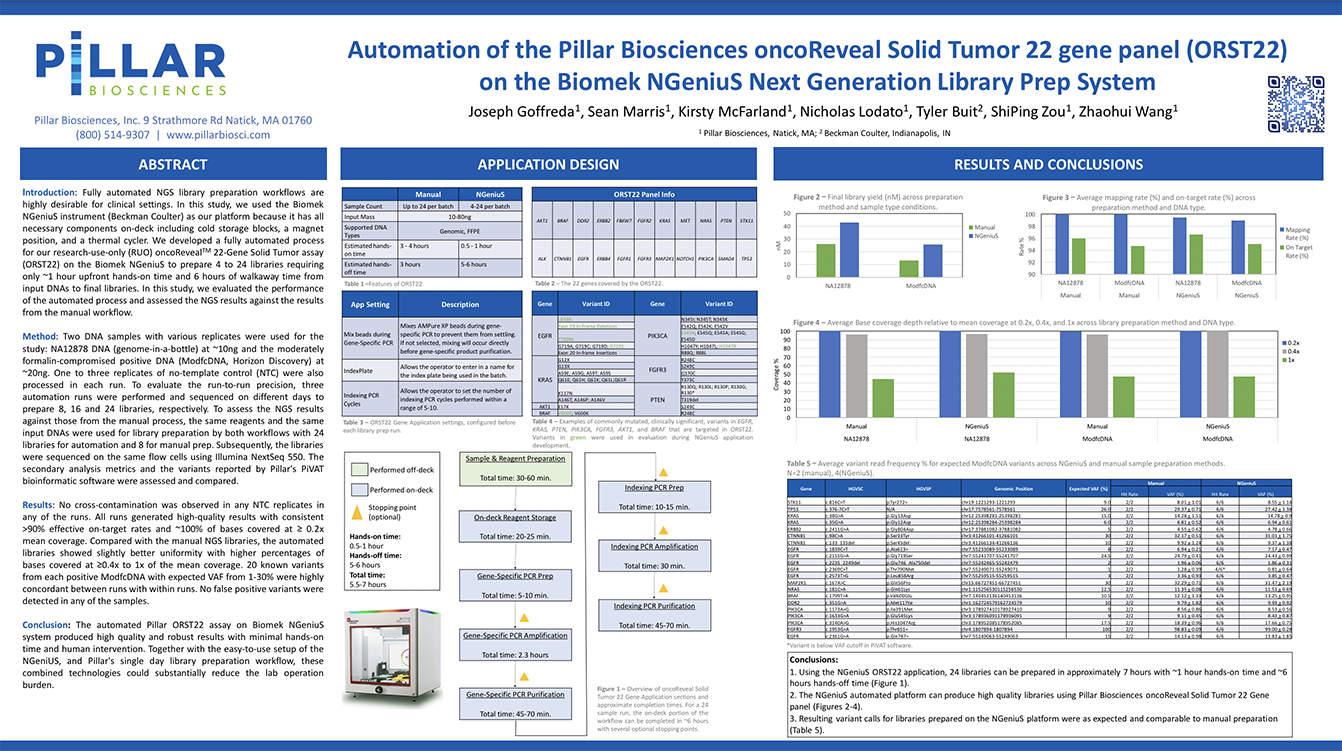
Pillar built and evaluated an automated application for its 48-gene oncoReveal® Solid Tumor v2 (oRSTv2) research-use panel on the Beckman Coulter Biomek NGeniuS library preparation system, taking DNA through to indexed libraries with minimal intervention. Twenty NA12878 replicates and 22 moderately formalin-compromised DNA samples at 19.35 ng input were processed across three runs of 24, 16, and 8 libraries, sequenced on Illumina NextSeq 550 and MiSeq with PiVAT® analysis. Every expected variant was called at its expected allele frequency — 478 of 478 across the study — with no cross-contamination in no-template controls.
To UMI or not to UMI: Obtaining robust low-frequency variant identification for liquid biopsy with a SLIMamp-based NGS chemistry without molecular barcoding
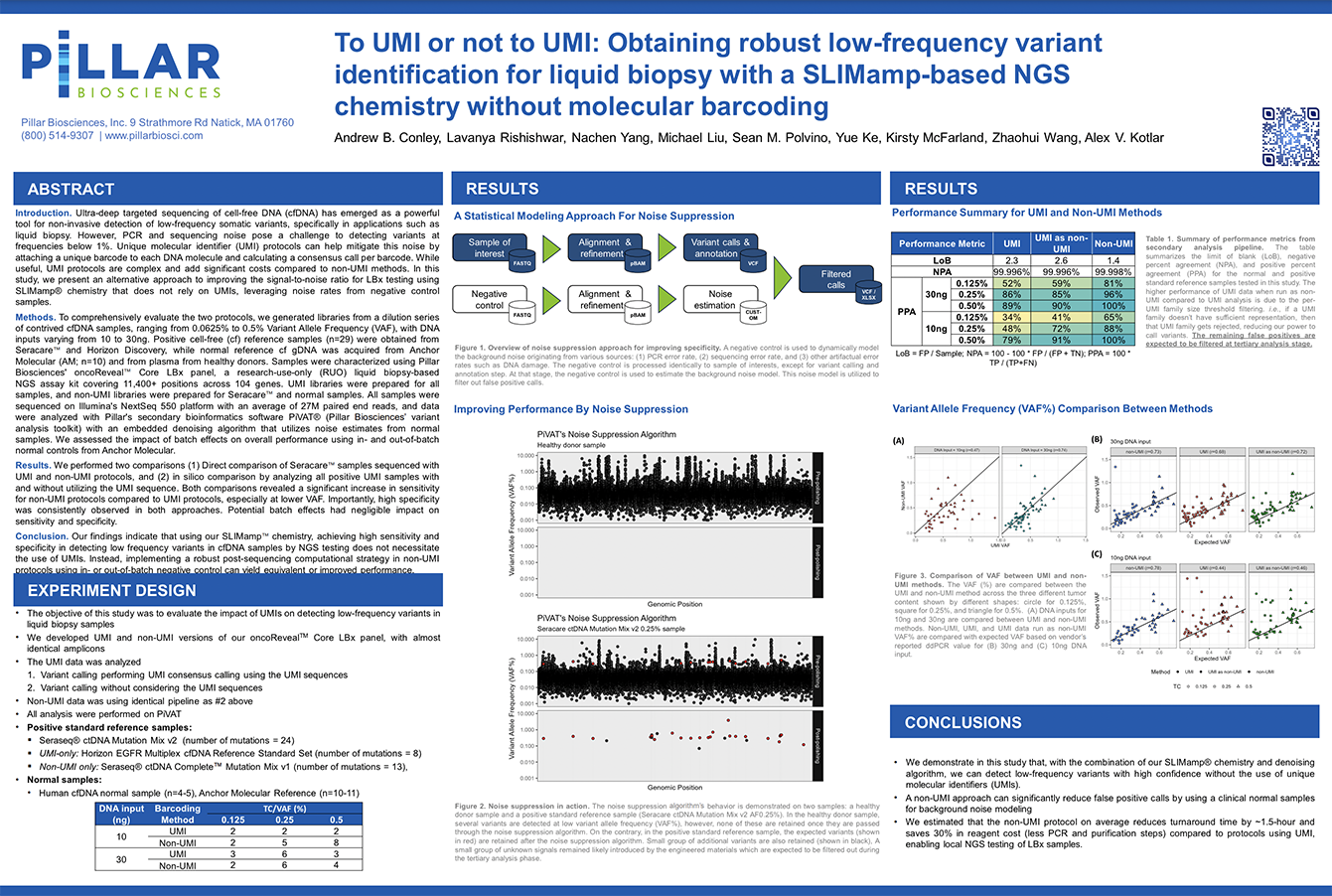
Pillar tested directly whether unique molecular identifiers (UMIs) are necessary for low-frequency variant detection in liquid biopsy, building UMI and non-UMI versions of the 104-gene oncoReveal® Core LBx panel with nearly identical amplicons. Contrived cell-free DNA dilutions from 0.0625% to 0.5% variant allele frequency at 10–30 ng input were sequenced on the Illumina NextSeq 550 and analyzed in PiVAT® using a denoising algorithm that models background noise from negative control samples. The non-UMI protocol was more sensitive than the UMI protocol at every allele frequency tested, while holding specificity above 99.99%.
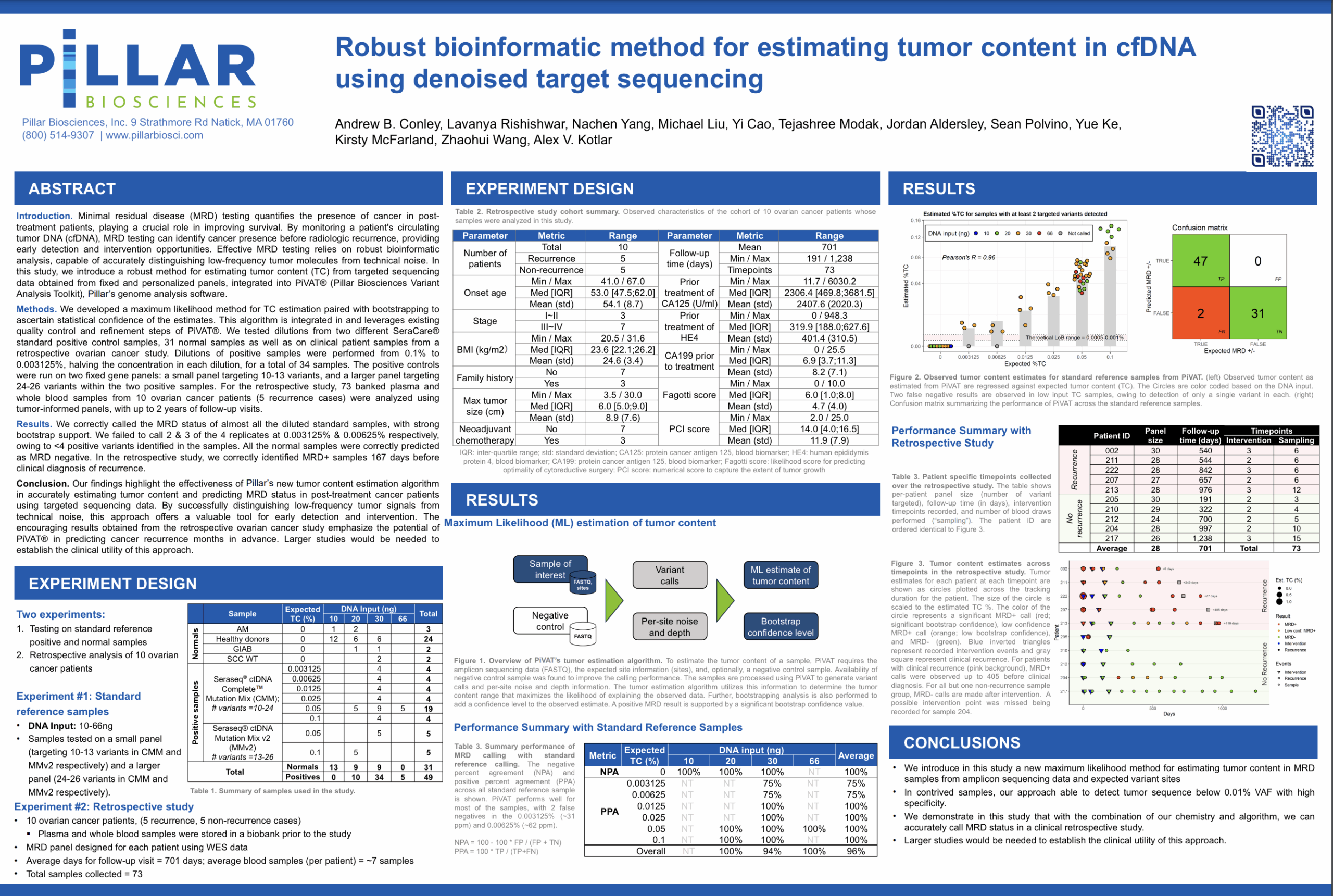
Robust bioinformatic method for estimating tumor content in cfDNAusing denoised target sequencing
Copy number amplifications are the hardest alteration class to call from cell-free DNA, usually demanding high circulating tumor DNA and broad genomic coverage. Pillar built oncoCNA, a Bayesian non-parametric caller inside PiVAT®, and tested it on Seraseq® ctDNA reference material across allele frequencies from 0.25% to 5% at 10, 20 and 30 ng input on the 104-gene oncoReveal® Core LBx panel. Performance was comparable at 10 ng and 30 ng, and the choice of negative control mattered more than input amount — clinical normal samples gave 100% negative percent agreement where synthetic normals did not.