
This small academic lab ramped up in-house NGS testing despite limited resources, and you can too
“There has been sort of this push to make genomics a send-out endeavor…and we are pushing back.” Dr. Cynthia Schandl is the director of a genomics lab at the Medical University of South Carolina (MUSC). Despite the small size of her team–three senior staff, three technologists, and a few supporting staff—they support the largest academic […]
Finding flexibility in a resource limited world: Online presentation
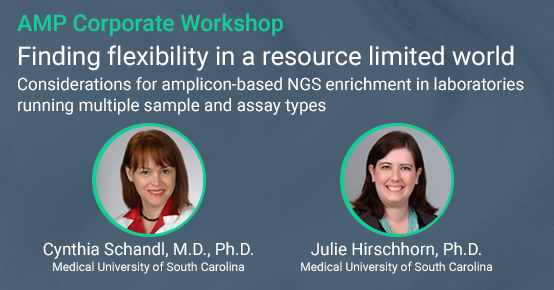
Time and resource optimization are top-of-mind for many clinical labs working with NGS. As a resource for clinical researchers and labs, we revisit this presentation on panel evaluation. In this presentation, initially shared as a corporate workshop at AMP 2019, Cynthia Schandl, MD, PhD and Julie Hirschhorn, PhD evaluate the flexibility, affordability, and ease-of-use of […]
The complexity of the NGS process, compounded by sample processing, results in unique challenges for clinical oncology laboratories

Increasingly, clinical samples of all types are being analyzed with the goal of matching patients to target therapies. In the summer of 2017, Thermo Fisher received the first FDA companion diagnostic test approval for multiple non-small cell lung cancer (NSCLC) therapies, while Foundation Medicine received FDA approval for their FoundationFocus CDxBRCA as a companion diagnostic for an ovarian cancer […]
5 reasons to go custom with your next sequencing panel
Off-the-shelf next-generation sequencing (NGS) panels save on sequencing costs by targeting specific genes, and the smaller resulting datasets are easier to analyze. The catch is, panels are limited to a defined set of genetic targets. This one-size-fits all approach is not well-suited to the cancer research community’s rapid pace of discovery. Custom panels, on the […]
Garbage in, greatness out: making the most of FFPE samples

The cancer research community relies on formalin-fixed samples, but the quality of these samples degrades over time. Sequencing data from partially degraded samples is plagued with artifacts. To address this “garbage in, garbage out” problem, Pillar Biosciences has developed a suite of tools that help sort actual variants from artifactual variants in low quality samples. […]
Meet SLIMamp: Columbia University’s new tumor sequencing workhorse

Next generation sequencing (NGS) is a powerful diagnostic tool for identifying tumor variants. Tumor sequencing workflows often rely on off-the-shelf panels, which allow for multiplexed amplification of known cancer mutational “hotspots”. These panels are diagnostically useful, but they can’t keep pace with the cancer research community’s diligent uncovering of new, previously unknown hotspots, genes, and […]
Workshop: Single-vial amplification-based NGS to interrogate variants in tumors with limited diagnostic material

Helen Fernandes, PhD, Co-director of Genomic Oncology at Columbia University, presented a talk on October 31, 2018 during the Corporate Workshop Day at the 2018 Association for Molecular Pathology (AMP) Annual Meeting in San Antonio, Texas. Click below to watch Dr. Fernandes’ talk: Click here In her talk, titled “Single-vial amplification-based NGS with rapid turn-around […]