
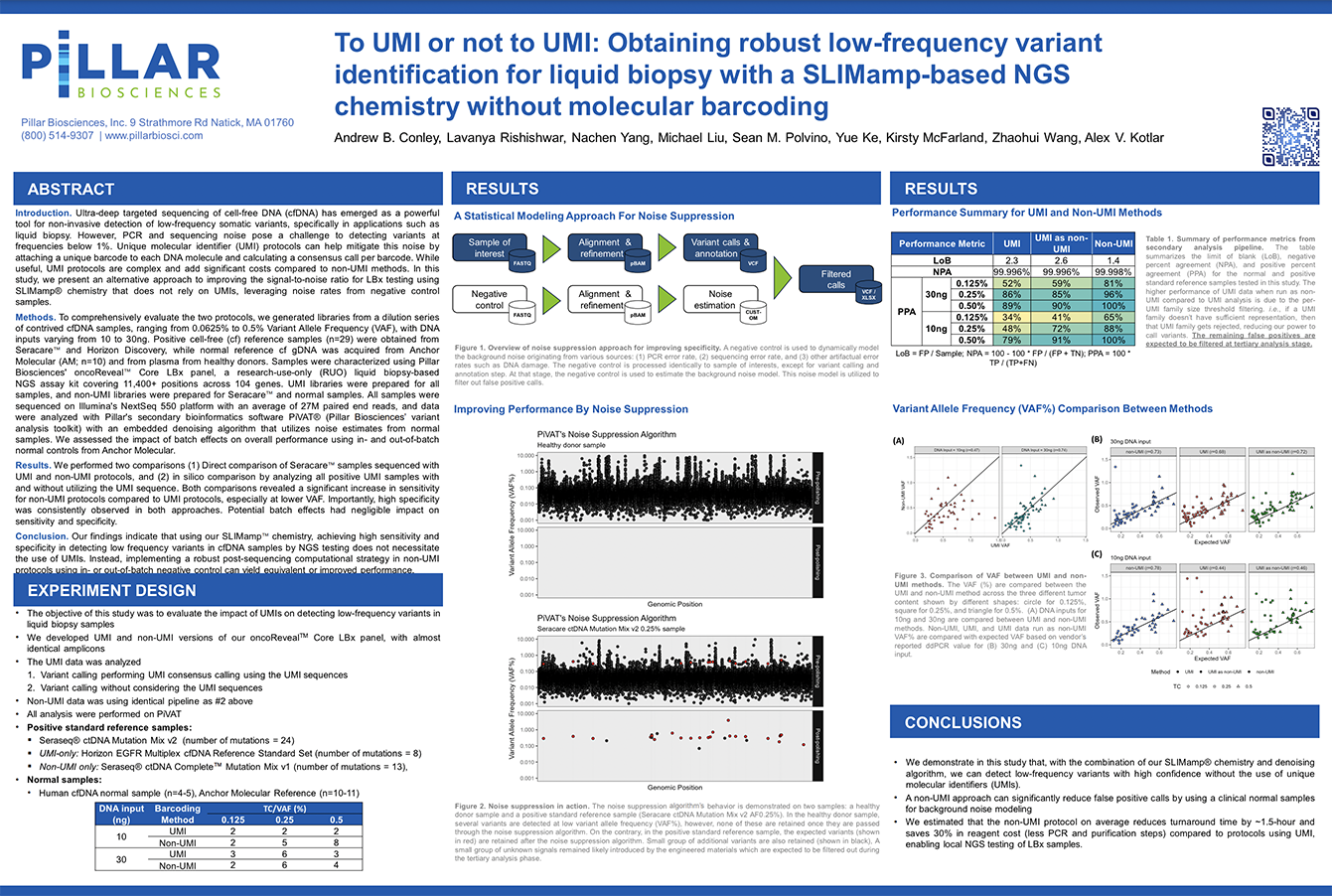
To UMI or not to UMI: Obtaining robust low-frequency variant identification for liquid biopsy with a SLIMamp-based NGS chemistry without molecular barcoding
Robust bioinformatic method for estimating tumor content in cfDNAusing denoised target sequencing
Copy number amplifications are the hardest alteration class to call from cell-free DNA, usually demanding high circulating tumor DNA and broad genomic coverage. Pillar built oncoCNA, a Bayesian non-parametric caller inside PiVAT®, and tested it on Seraseq® ctDNA reference material across allele frequencies from 0.25% to 5% at 10, 20 and 30 ng input on the 104-gene oncoReveal® Core LBx panel. Performance was comparable at 10 ng and 30 ng, and the choice of negative control mattered more than input amount — clinical normal samples gave 100% negative percent agreement where synthetic normals did not.
Detection of Microsatellite Instability (MSI) Using oncoReveal Core LBx, a Multiplexed, Single Tube, Liquid Biopsy Assay
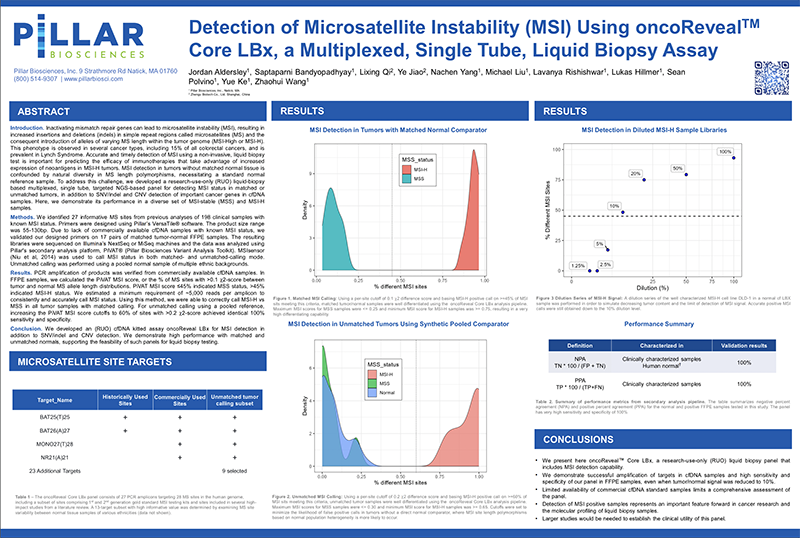
Pillar added microsatellite instability (MSI) detection to the research-use oncoReveal® Core LBx liquid biopsy panel alongside SNV, indel and copy number calling, supporting immunotherapy selection — MSI-high tumors respond to checkpoint inhibitors, and the phenotype appears in roughly 15% of colorectal cancers and across Lynch syndrome. Twenty-seven amplicons covering 28 microsatellite sites were validated on 17 matched tumor-normal FFPE pairs, sequenced on Illumina NextSeq or MiSeq and scored in PiVAT® using MSIsensor. Sensitivity and specificity were 100% in both matched and unmatched calling modes, with correct calls holding down to 10% tumor dilution.
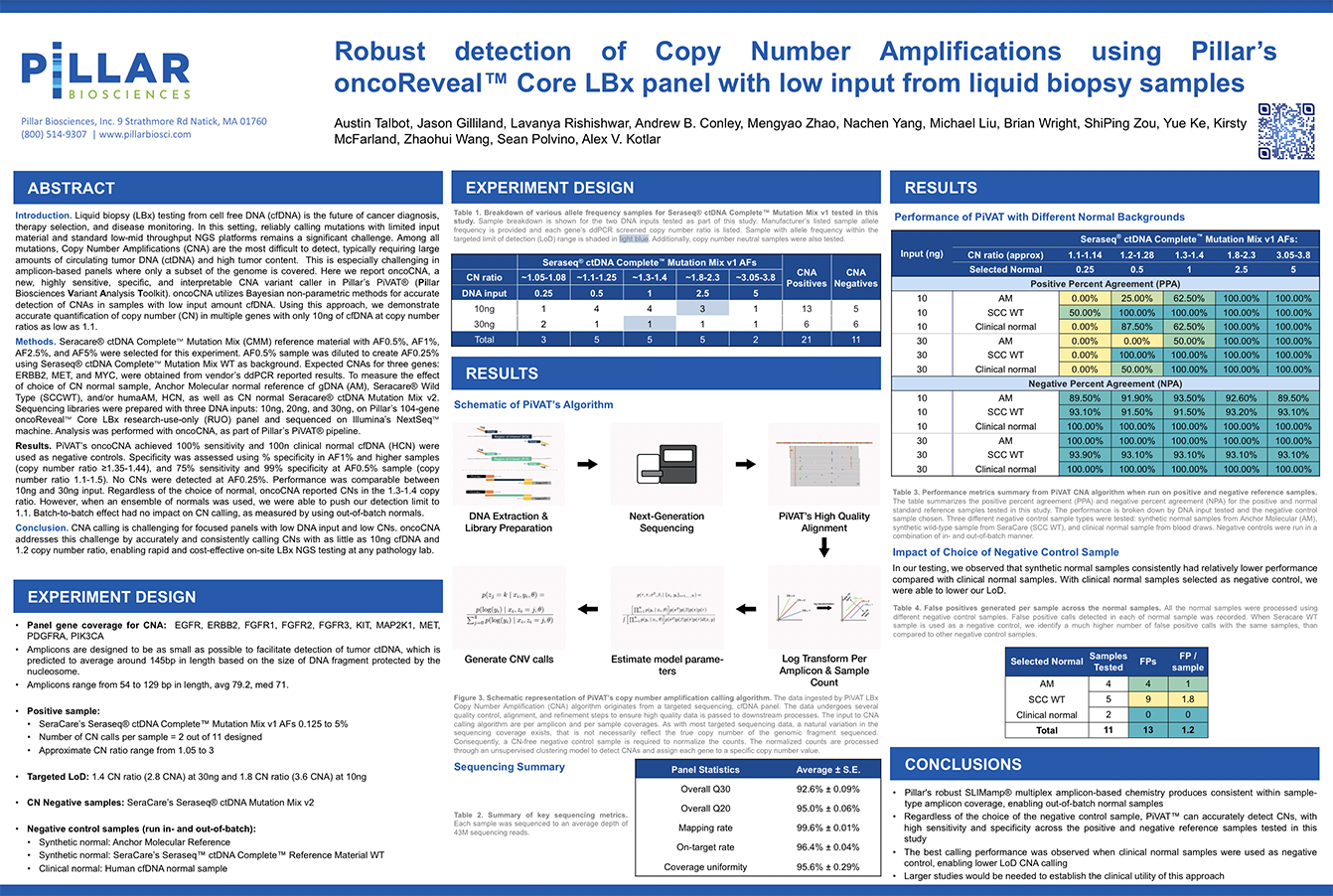
Robust detection of Copy Number Amplifications using Pillar’s oncoReveal™ Core LBx panel with low input from liquid biopsy samples
Copy number amplifications are the hardest alteration class to call from cell-free DNA, usually demanding high circulating tumor DNA and broad genomic coverage. Pillar built oncoCNA, a Bayesian non-parametric caller inside PiVAT®, and tested it on Seraseq® ctDNA reference material across allele frequencies from 0.25% to 5% at 10, 20 and 30 ng input on the 104-gene oncoReveal® Core LBx panel. Performance was comparable at 10 ng and 30 ng, and the choice of negative control mattered more than input amount — clinical normal samples gave 100% negative percent agreement where synthetic normals did not.
Robust Low Frequency Somatic Variant Detection in cfDNA Using a SLIMamp® Based liquid Biopsy Assay
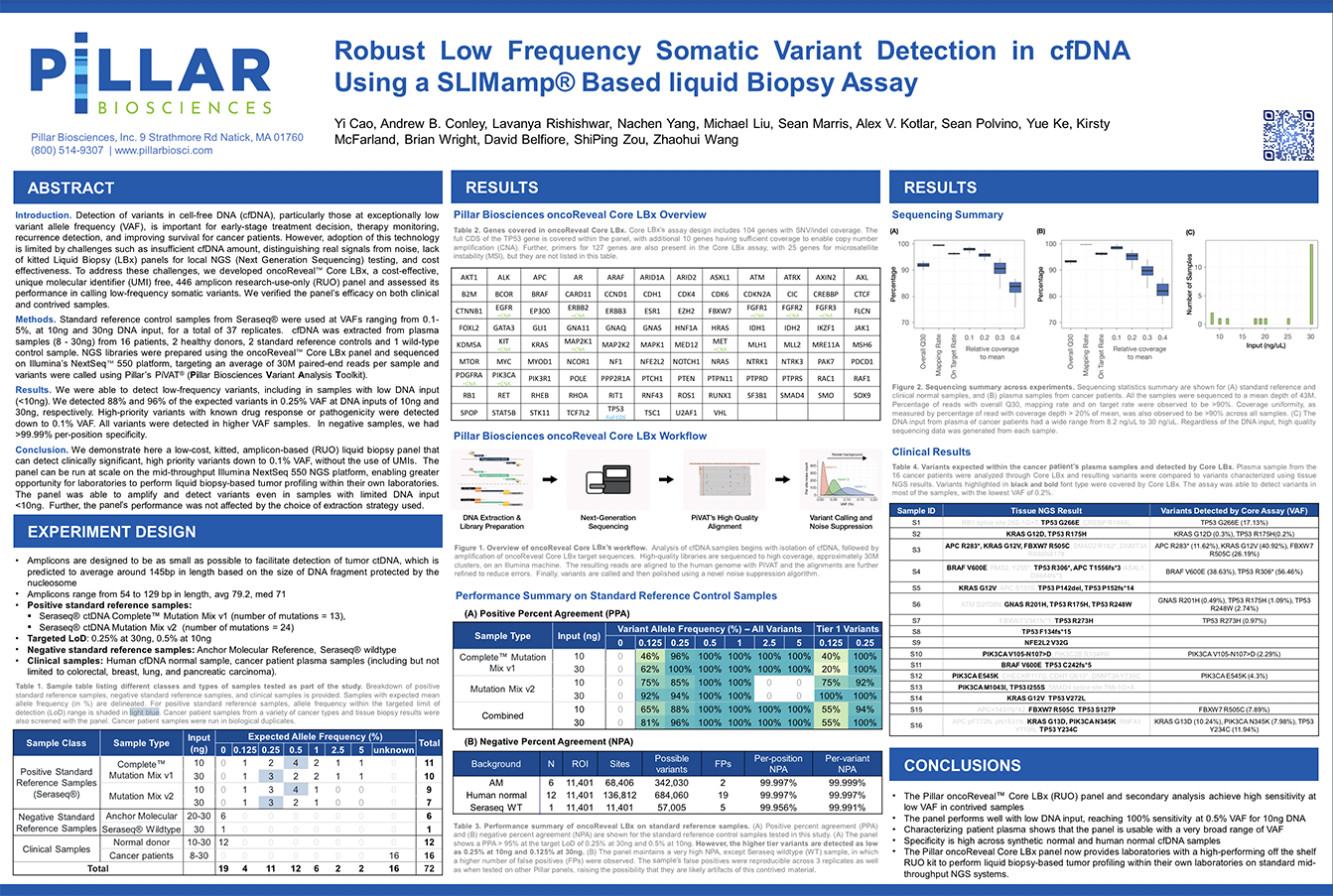
Pillar assessed the oncoReveal® Core LBx panel — a UMI-free, 446-amplicon, 104-gene research-use liquid biopsy kit — for detecting low-frequency somatic variants in cell-free DNA. Seraseq® reference controls from 0.1% to 5% variant allele frequency at 10 and 30 ng input were run across 37 replicates alongside plasma from 16 cancer patients, two healthy donors and wild-type controls, sequenced on the Illumina NextSeq 550 with PiVAT® analysis. The panel detected 88% of expected variants at 0.25% VAF with 10 ng input and 96% with 30 ng, found high-priority variants down to 0.1%, and held per-position specificity above 99.99%.
oncoRevealTM Fusion LBx: Single-tube multiplexed PCR-based NGS assay for detection of multiple gene fusions from cell free RNA
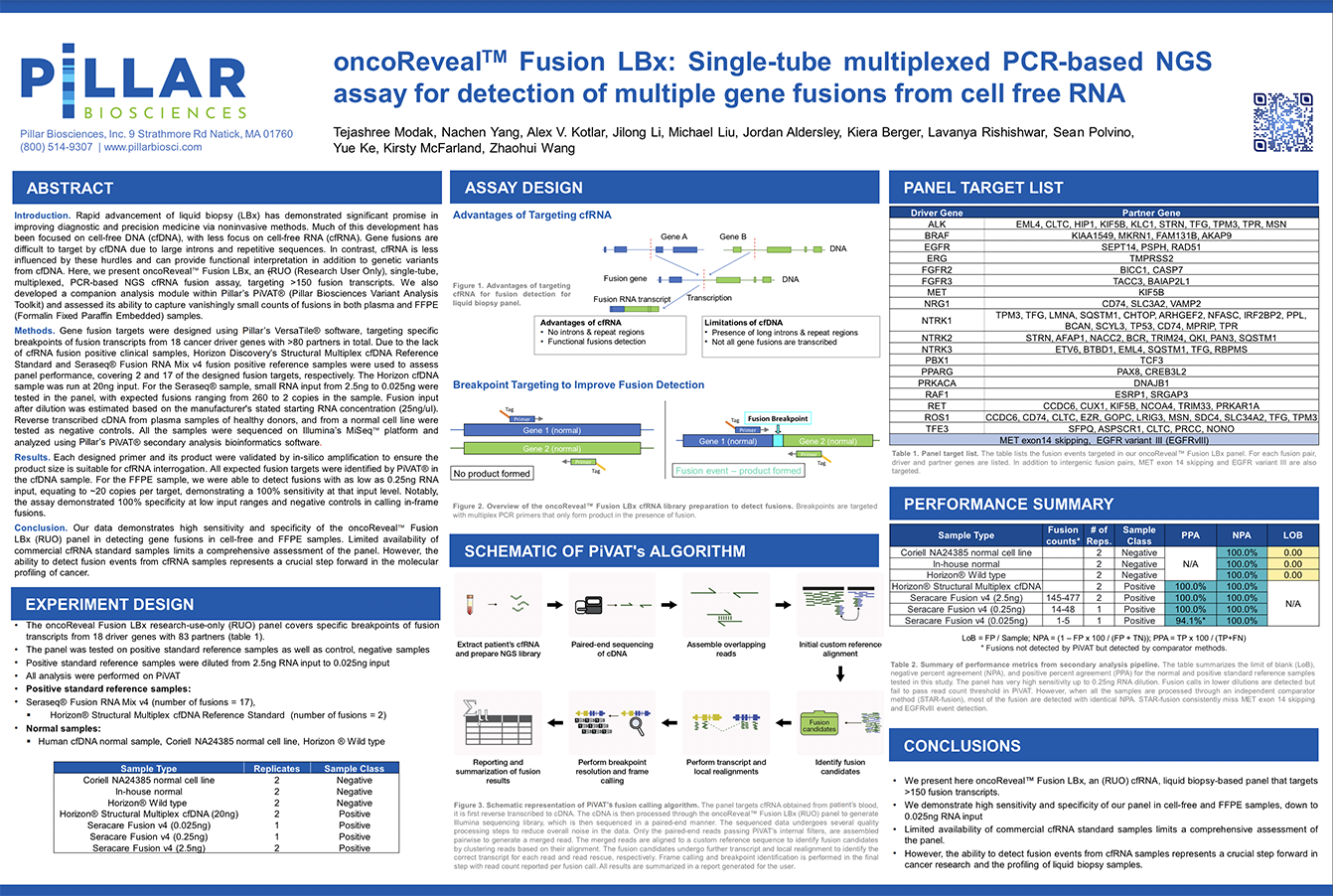
Pillar developed oncoReveal® Fusion LBx, a research-use single-tube multiplexed PCR NGS assay detecting more than 150 fusion transcripts from cell-free RNA (cfRNA) — an analyte that avoids the long introns and repeat regions making fusions hard to catch in cell-free DNA. The panel targets breakpoints across 18 driver genes with 83 partners plus MET exon 14 skipping and EGFR variant III, and was assessed on Horizon and Seraseq® reference standards from 2.5 ng down to 0.025 ng RNA input on the Illumina MiSeq. Sensitivity and specificity were both 100% down to 0.25 ng input, equating to roughly 20 copies per target.
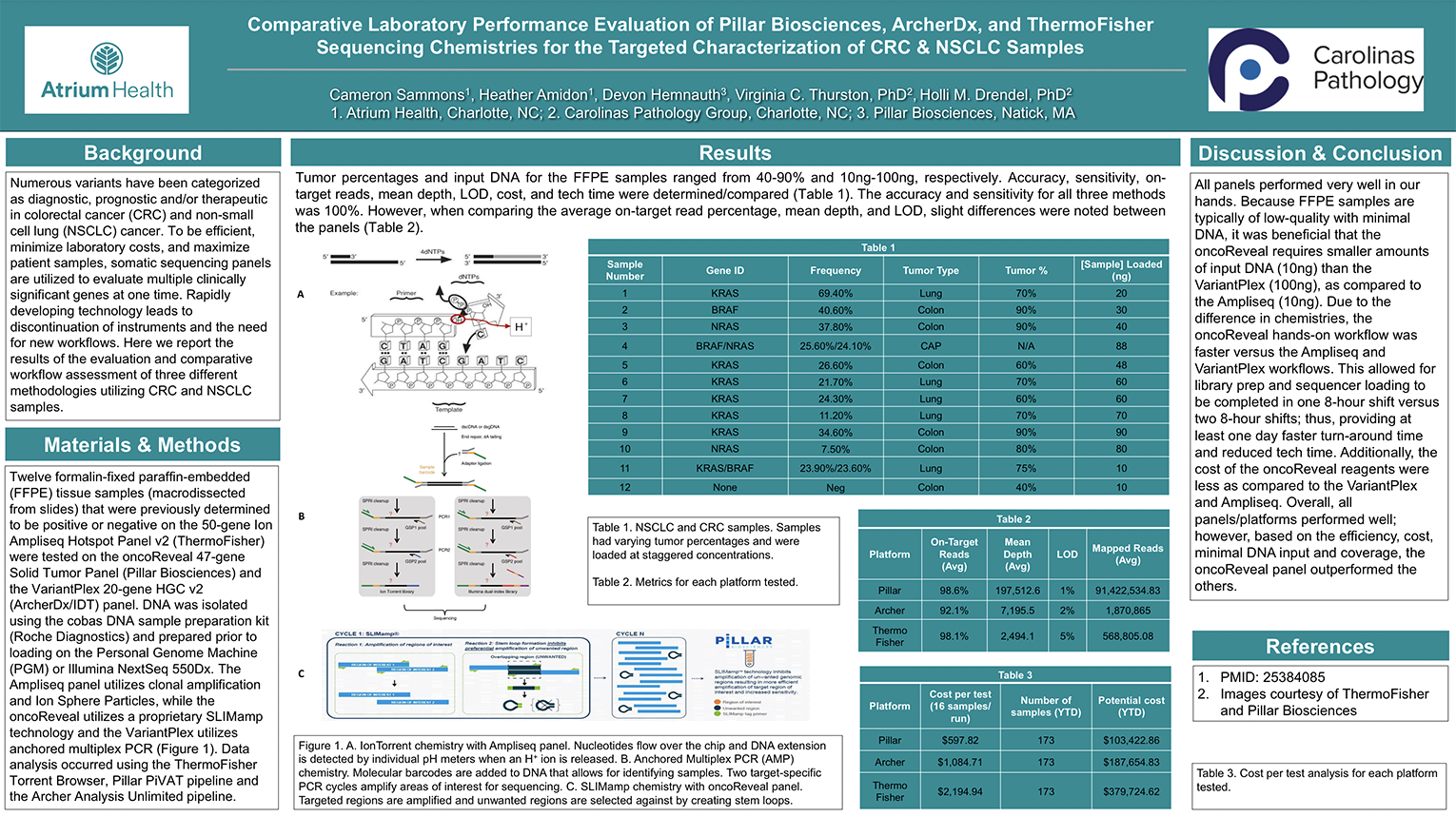
Comparative Laboratory Performance Evaluation of Pillar Biosciences, ArcherDx, and ThermoFisher Sequencing Chemistries for the Targeted Characterization of CRC & NSCLC Samples
Pillar Biosciences oncoRevealTM methylQuant Panels: Accurate and easy-to-use methylation NGS assays leveraging SLIMamp technology
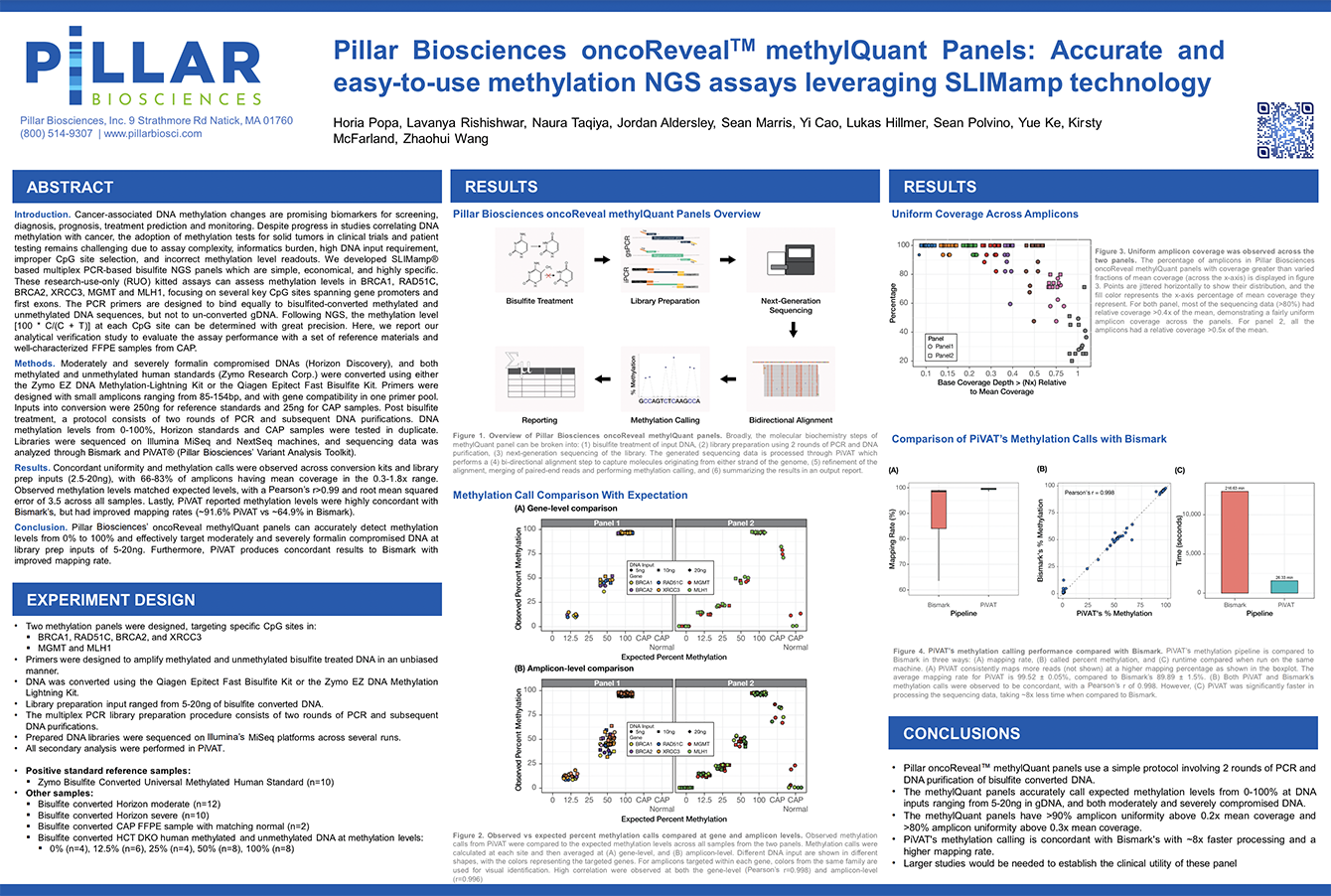
Pillar developed two research-use bisulfite NGS methylation panels on SLIMamp® chemistry — one covering BRCA1, RAD51C, BRCA2 and XRCC3, the other MGMT and MLH1 — aimed at the high DNA input, informatics burden and readout accuracy problems that have slowed methylation testing in solid tumors. Primers bind bisulfite-converted methylated and unmethylated DNA equally but not unconverted genomic DNA, and the protocol is two rounds of PCR with purification. Across Zymo standards, moderately and severely formalin-compromised Horizon DNA and CAP FFPE samples, observed methylation matched expected levels with Pearson’s r above 0.99 at 5–20 ng input.
Combining High-Throughput, High-Resolution Targeted Spatial Microdissection with SLIMamp® NGS Chemistry for Sensitive and Accurate Molecular Characterization on Low-Quantity, Low-Quality FFPE Samples
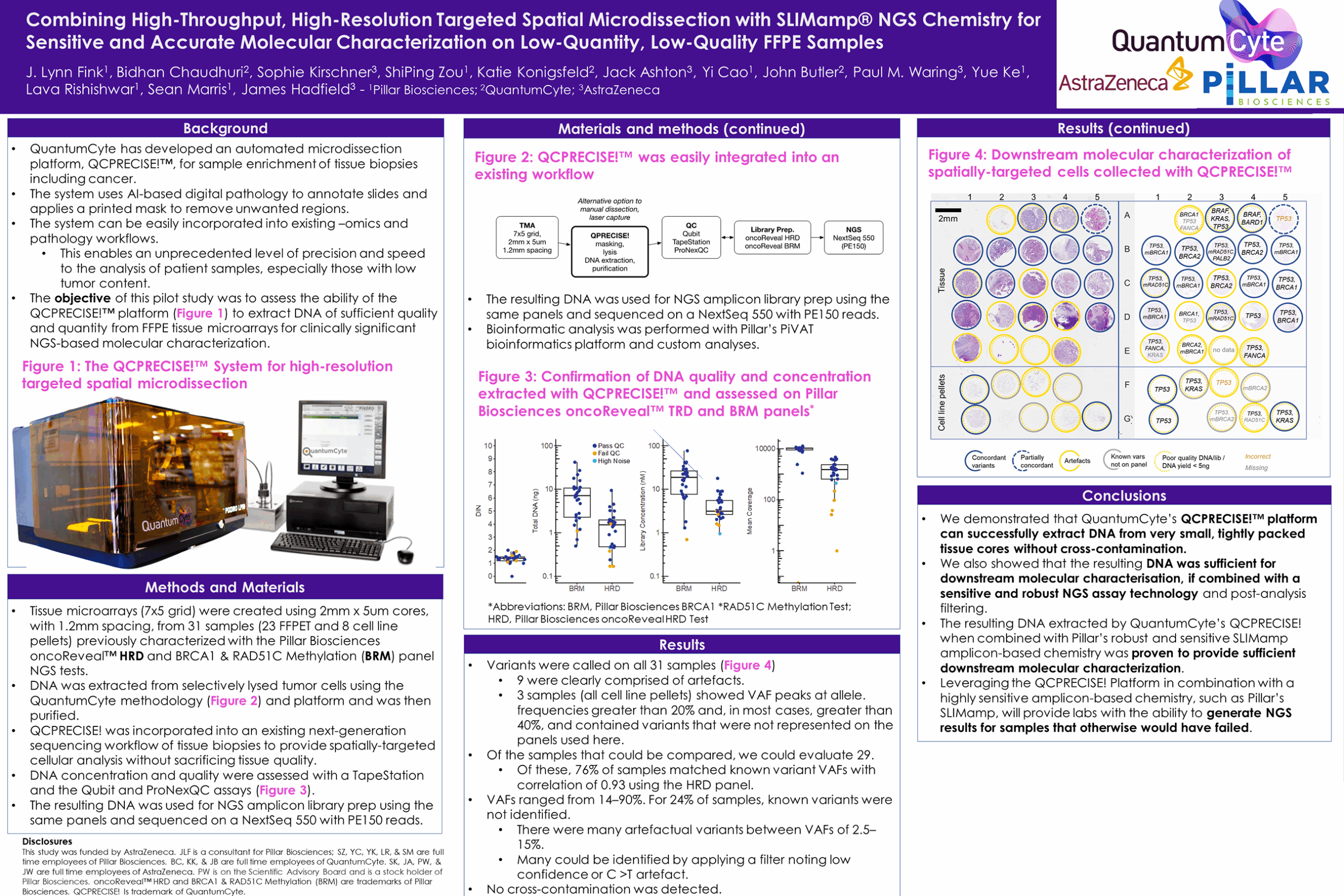
Pillar, QuantumCyte and AstraZeneca tested whether AI-guided spatial microdissection can rescue FFPE samples that would otherwise fail NGS. QuantumCyte’s QCPRECISE!™ platform uses digital pathology to annotate slides and a printed mask to remove unwanted regions, extracting DNA from selectively lysed tumor cells in 2 mm tissue microarray cores taken from 31 samples previously characterized on Pillar’s oncoReveal® HRD and BRCA1 & RAD51C methylation panels. Libraries were sequenced on the NextSeq 550 and analyzed in PiVAT®. Variants were called on all 31 samples with no cross-contamination, and 76% of evaluable samples matched known variant allele frequencies at 0.93 correlation.
Evaluation of Homologous Repair Deficiency Status in Ovarian Carcinoma using In House Next Generation Sequencing Panels
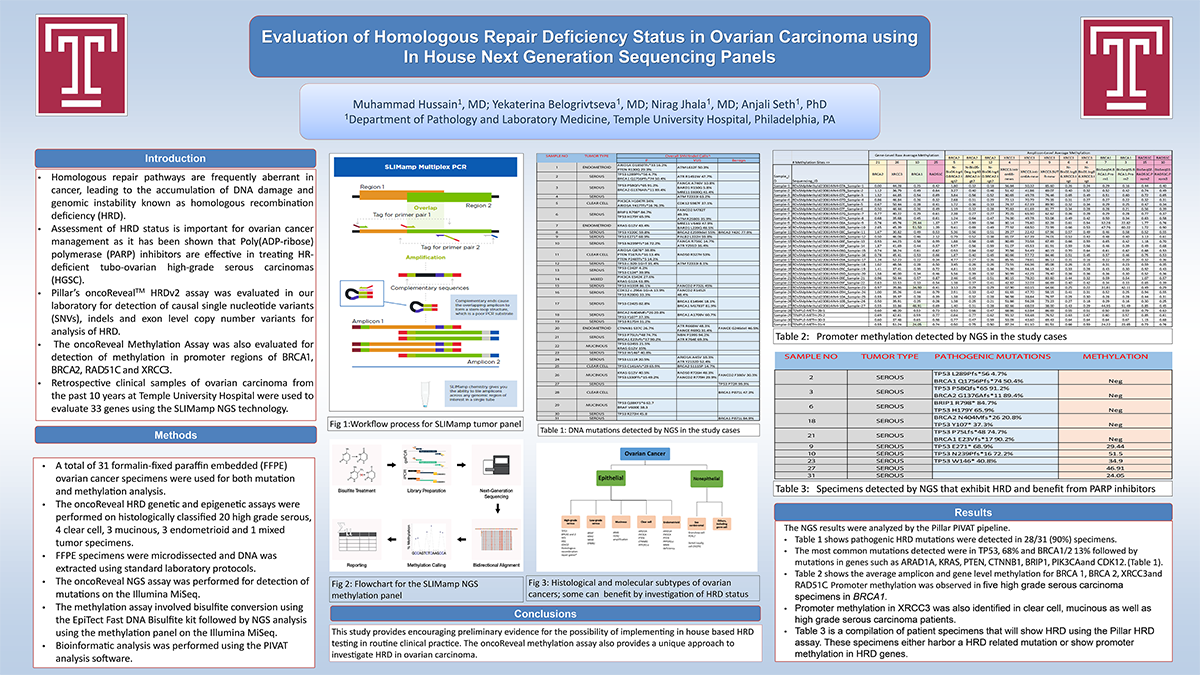
Temple University Hospital evaluated Pillar’s oncoReveal® HRDv2 assay together with the oncoReveal® methylation assay for assessing homologous recombination deficiency (HRD) in ovarian carcinoma, the marker predicting PARP inhibitor benefit in tubo-ovarian high-grade serous carcinoma. Thirty-one retrospective FFPE ovarian specimens — 20 high-grade serous, 4 clear cell, 3 mucinous, 3 endometrioid and 1 mixed — were microdissected and run for SNVs, indels and exon-level copy number variants across 33 genes on the Illumina MiSeq, plus BRCA1, BRCA2, RAD51C and XRCC3 promoter methylation, with PiVAT® analysis. Pathogenic HRD mutations appeared in 28 of 31 specimens (90%), and methylation identified further HRD-positive cases.