
Accelerating Precision Medicine with Rapid Front-Line NGS
Event Name: AMP 2025
TBC
Laboratory Validation of Pillar’s onocoReveal Myeloid Panel on the Illumina MiSeq i100 to Deliver Rapid Front-Line NGS for Heme Malignancies
Event Name: AMP 2025
TBC
Rapid Detection of Actionable Biomarkers in Liquid Biopsy from Non-Small Cell Lung Cancer and Breast Cancer Using Targeted NGS-Based Assays
Event Name: AMP 2025
TBC
Optimizing Your Lab’s Precision Medicine Strategy Through Rapid, Front-Line NGS
Publishing Entity: Dark Daily
TBC
Improving Access to NGS-Based Liquid Biopsy Testing for Advanced Cancers
Publishing Entity: GenomeWeb | Precision Medicine Online
TBC
Detecting Contamination in Cell-free DNA Sequencing Libraries using Germline Markers
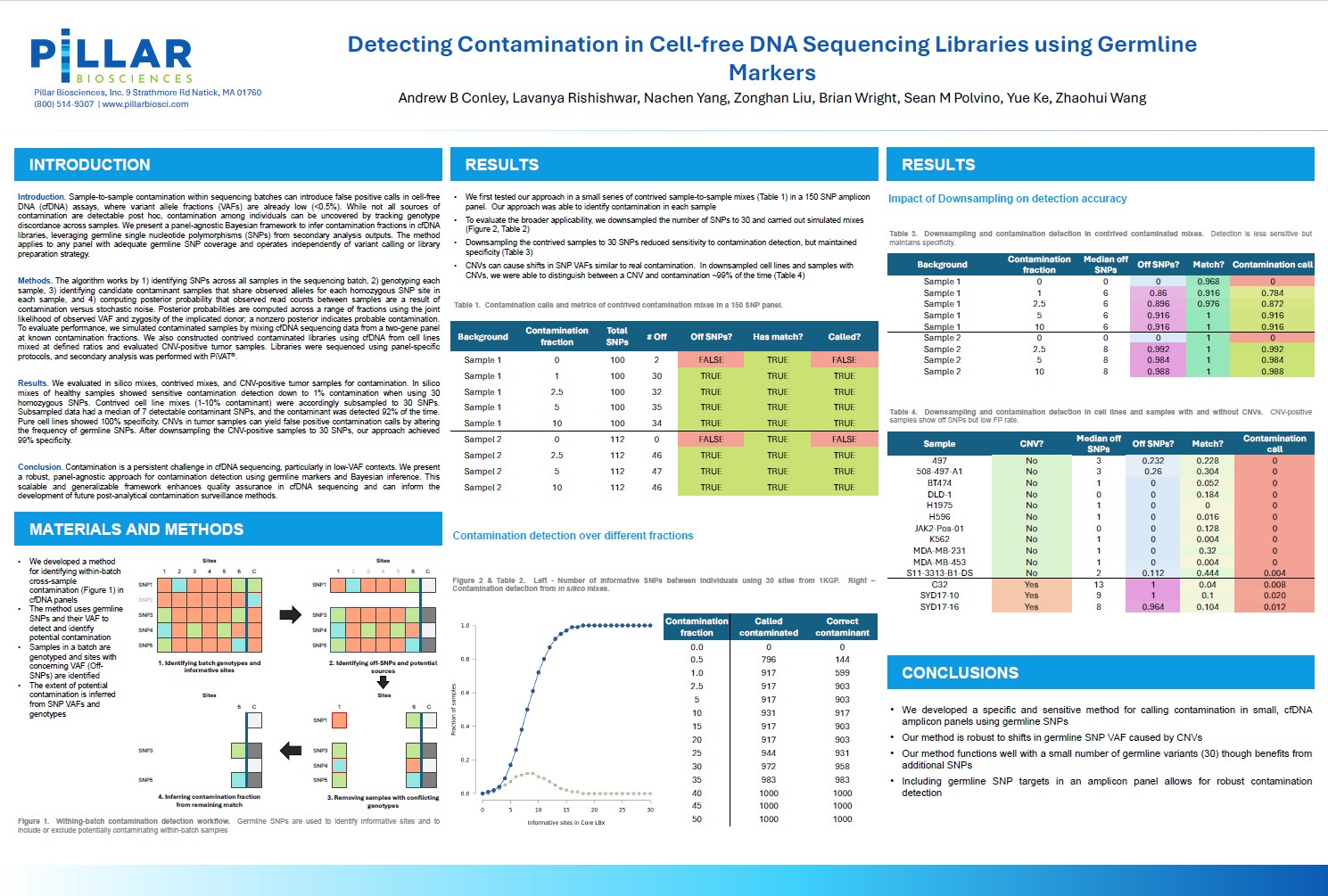
Pillar developed a panel-agnostic Bayesian method to detect sample-to-sample contamination within cell-free DNA (cfDNA) sequencing batches, where variant allele fractions below 0.5% make false positive calls especially costly. The algorithm genotypes germline single nucleotide polymorphisms (SNPs) across a batch, flags sites with discordant allele fractions, and computes the posterior probability that observed read counts reflect contamination rather than stochastic noise. Across in silico mixes, contrived cell line mixes, and CNV-positive tumor samples it detected contamination down to 1% using 30 homozygous SNPs while holding 99–100% specificity.
Streamlined and Accurate Detection of Actionable Fusions with the oncoReveal Multi-Cancer RNA Fusion v2 Panel
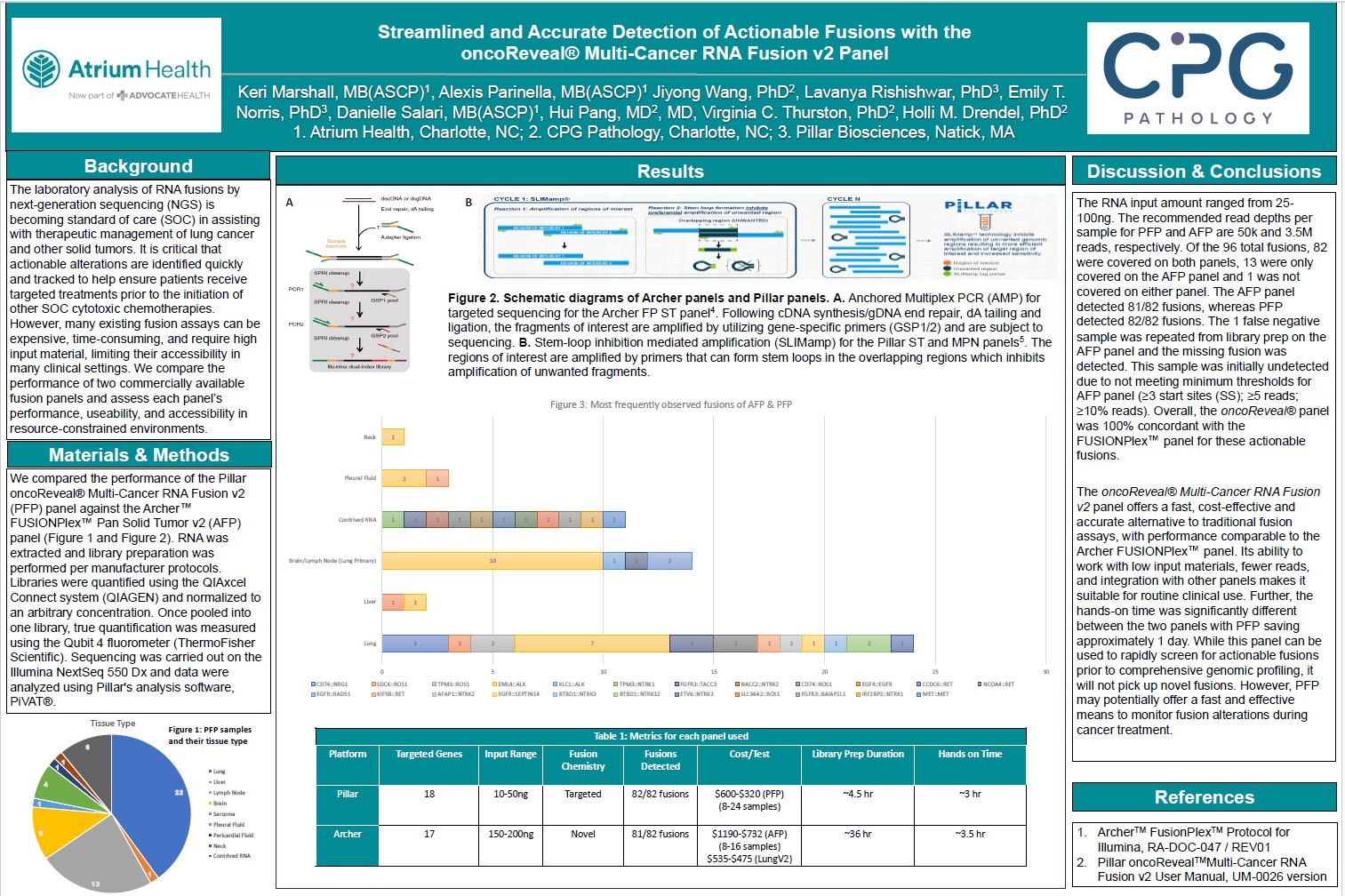
Atrium Health and CPG Pathology compared Pillar’s oncoReveal® Multi-Cancer RNA Fusion v2 panel against Archer’s FUSIONPlex Pan Solid Tumor v2 for detecting actionable gene fusions in lung and other solid tumors. RNA from 96 fusion-positive specimens — lung, liver, lymph node, brain, sarcoma, pleural and pericardial fluid — was prepared per protocol and sequenced on the Illumina NextSeq 550 Dx with PiVAT® analysis. Pillar detected 82 of 82 covered fusions, fully concordant with Archer, at roughly half the cost per test and with library preparation in 4.5 hours rather than 36.
Comparative Performance of Targeted and Comprehensive Somatic NGS Panels in Paired Tumor and Liquid Biopsy Samples from a Prospective Solid Tumor Cohort
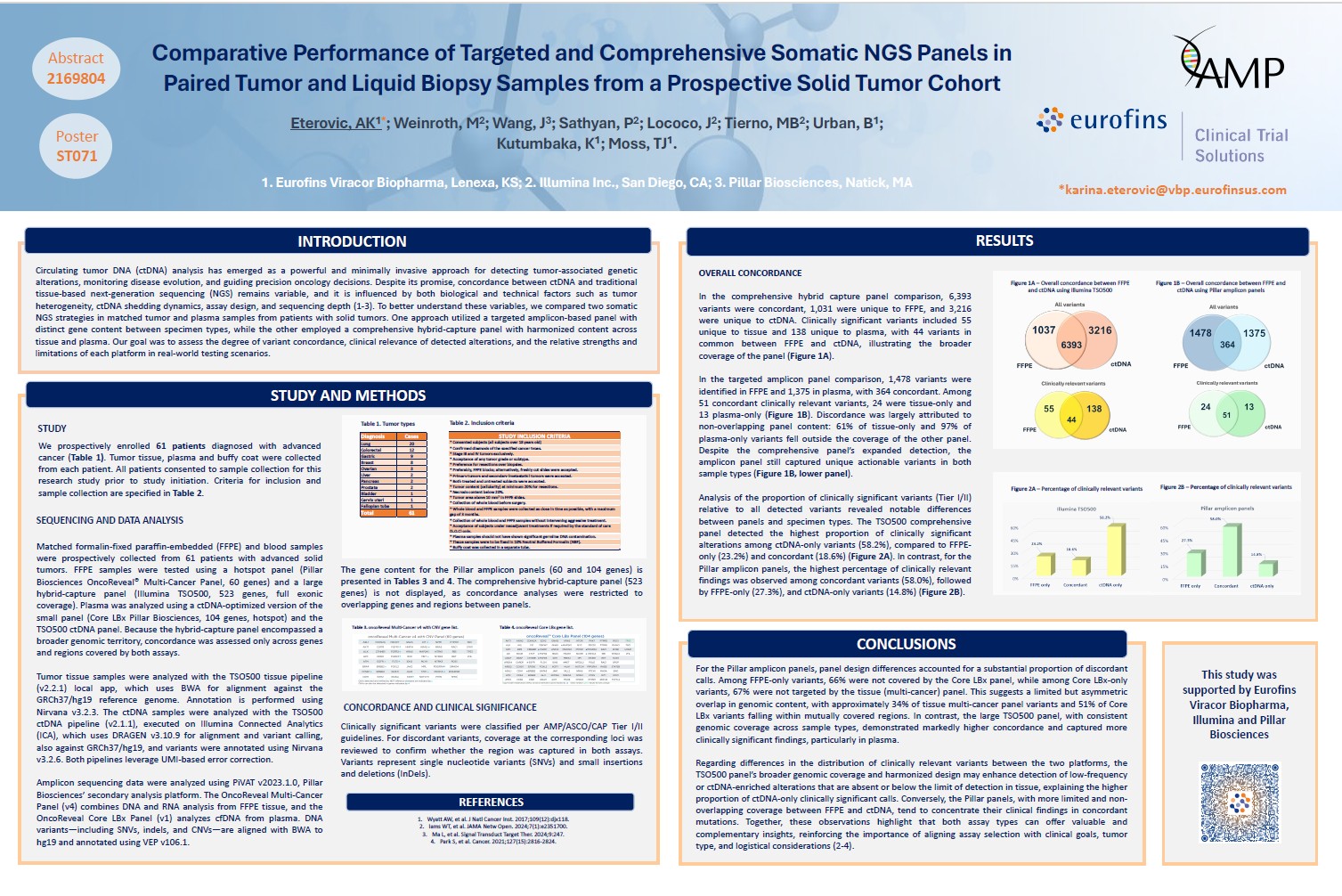
Eurofins Viracor Biopharma, with Illumina and Pillar, prospectively enrolled 61 patients with advanced solid tumors and tested matched FFPE tissue and plasma using Pillar’s amplicon panels (oncoReveal® Multi-Cancer, 60 genes, tissue; Core LBx, 104 genes, ctDNA) alongside Illumina’s TSO500 hybrid-capture panels (523 genes). The comprehensive panel showed higher tissue–plasma concordance, largely because its gene content is harmonized across specimen types while the Pillar tissue and liquid biopsy panels target different gene sets. Even so, 58.0% of Pillar’s concordant calls were clinically significant Tier I/II variants — the highest such proportion in the study.
Race Against the Clock: Validating a Rapid NGS Myeloid Panel
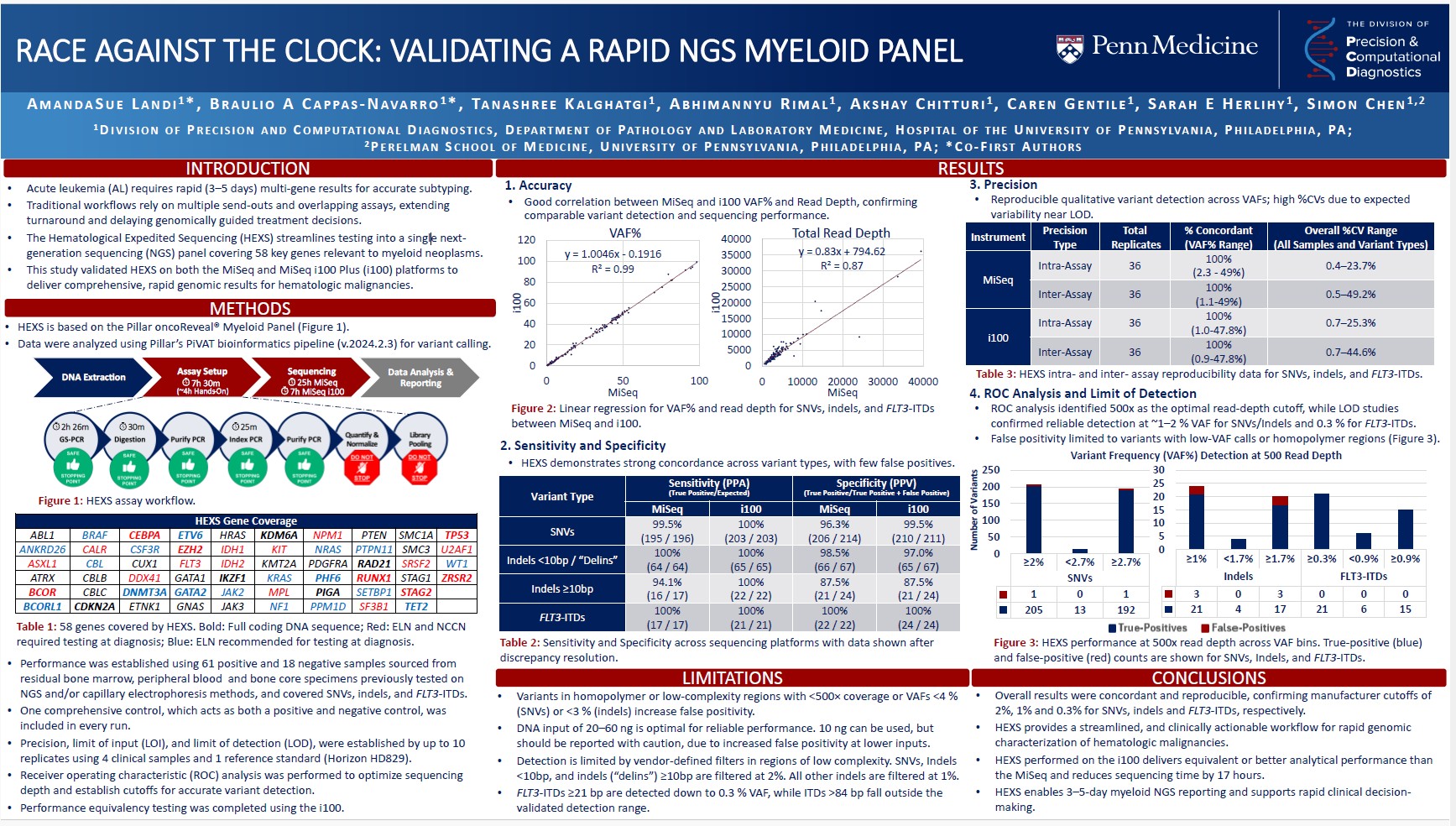
The Hospital of the University of Pennsylvania built its Hematological Expedited Sequencing (HEXS) assay on Pillar’s oncoReveal® Myeloid Panel, consolidating 58 myeloid neoplasm genes into a single NGS test to replace multiple send-outs for acute leukemia subtyping. Validation used 61 positive and 18 negative bone marrow, peripheral blood, and bone core specimens covering SNVs, indels, and FLT3 internal tandem duplications, on both the MiSeq and MiSeq i100 with PiVAT® variant calling. HEXS reached 99.5–100% sensitivity across variant types and enables 3–5 day myeloid NGS reporting, with the i100 cutting sequencing time by 17 hours.
Performance Comparison of the Illumina MiSeq i100 with Established Instruments for Amplicon-Based Somatic and Liquid Biopsy Sequencing Panels
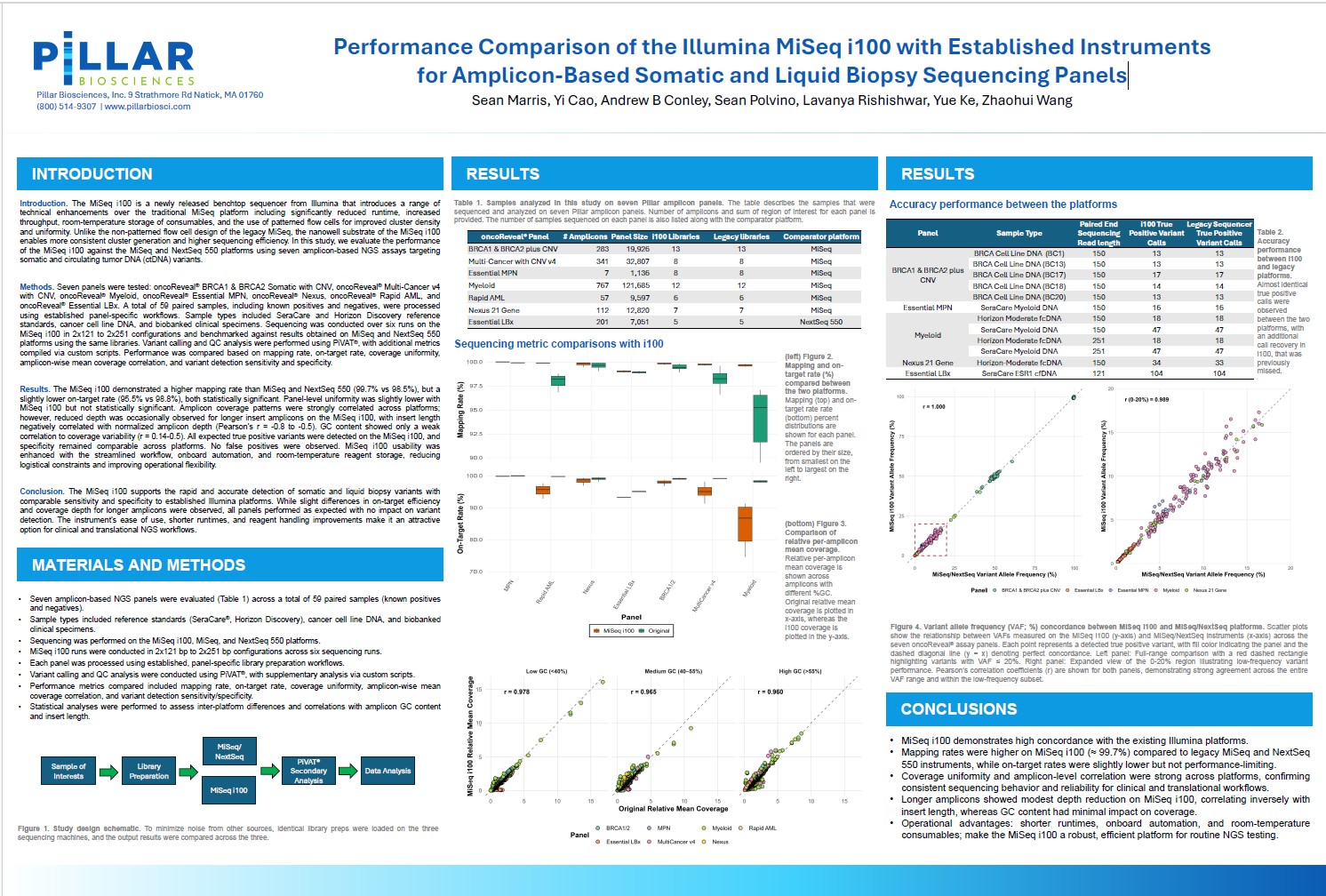
Pillar benchmarked seven oncoReveal® amplicon NGS panels — BRCA1/BRCA2 Somatic with CNV, Multi-Cancer v4 with CNV, Myeloid, Essential MPN, Nexus 21 Gene, Rapid AML, and Essential LBx — on Illumina’s new MiSeq i100 against the legacy MiSeq and NextSeq 550. Fifty-nine paired samples, including SeraCare and Horizon Discovery reference standards, cancer cell line DNA, and biobanked clinical specimens, were run from identical libraries across six sequencing runs. Every expected true-positive variant was detected on the i100 with no false positives, confirming that the portfolio transfers cleanly to the new platform.