
Evaluation of oncoReveal Essential MPN Panel on Illumina MiSeq i100 for Key Driver Mutation Testing in Myeloproliferative Neoplasms
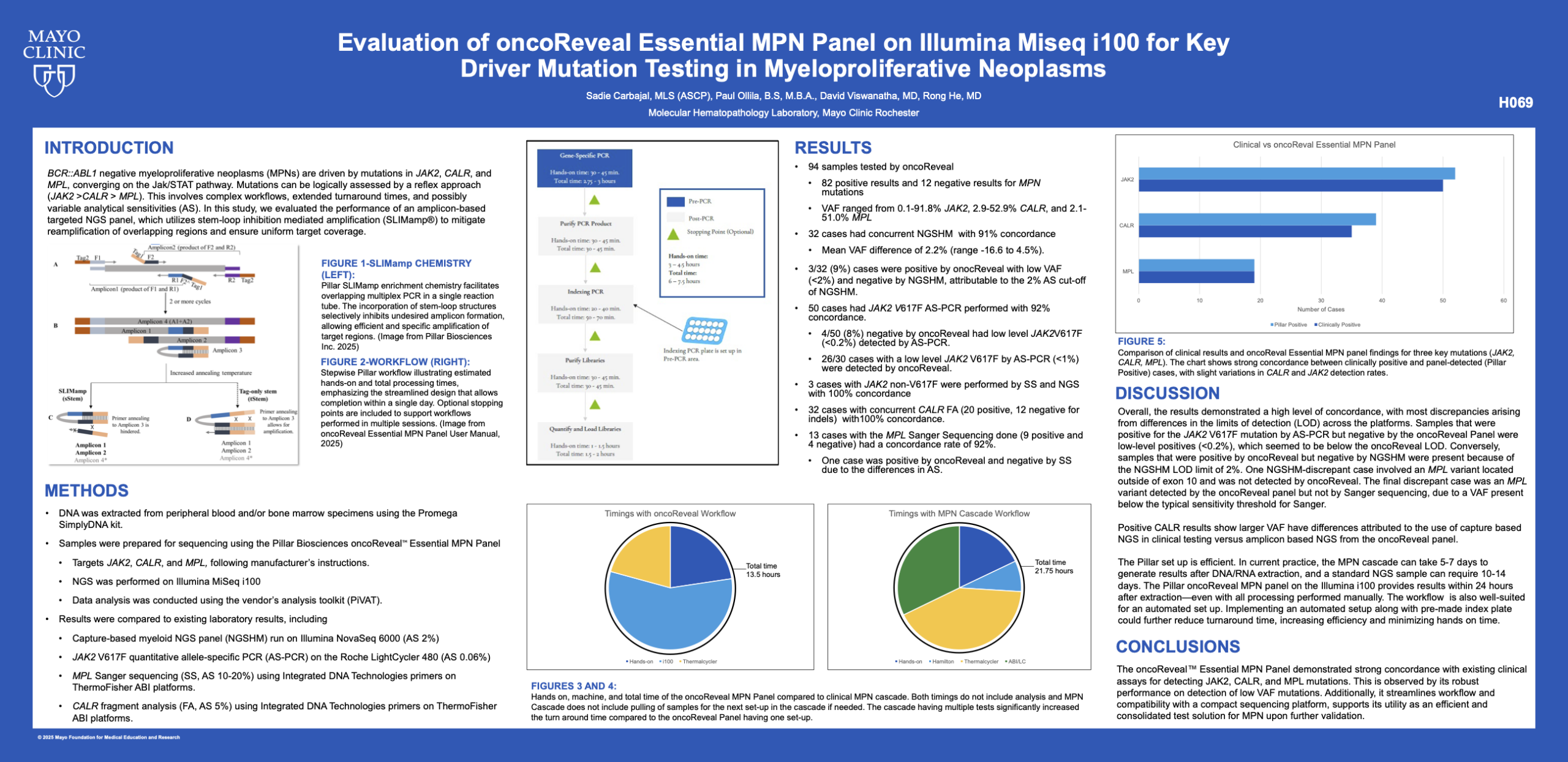
Mayo Clinic’s Molecular Hematopathology Laboratory evaluated Pillar’s oncoReveal® Essential MPN Panel — a single-tube SLIMamp® amplicon NGS assay targeting JAK2, CALR, and MPL — on the Illumina MiSeq i100 for BCR::ABL1-negative myeloproliferative neoplasm (MPN) testing. Ninety-four peripheral blood and bone marrow specimens were compared against the laboratory’s capture-based myeloid NGS panel, JAK2 V617F allele-specific PCR, CALR fragment analysis, and MPL Sanger sequencing. The panel showed 91–100% concordance across comparators and returned results within 24 hours of extraction, against 5–7 days for the conventional reflex cascade.
Targeted NGS as a Front-Line Strategy to Accelerate the Delivery of Precision Medicine for Solid and Heme Tumors

Publishing Entity: GenomeWeb | Precision Medicine Online
TBC
Leveraging Pillar Biosciences Targeted NGS Panels as a Rapid Front-Line Strategy to Inform and Accelerate the Delivery of Precision Medicine
Event Name: AMP 2024
TBC
Streamlining the Clinical Laboratory Workflow of Myeloproliferative Neoplasms with Next-Generation Sequencing

Publishing Entity: GenomeWeb | Precision Medicine Online
TBC
Performance of Pillar oncoReveal Essential MPN Panel: experiences of two clinical diagnostic laboratories
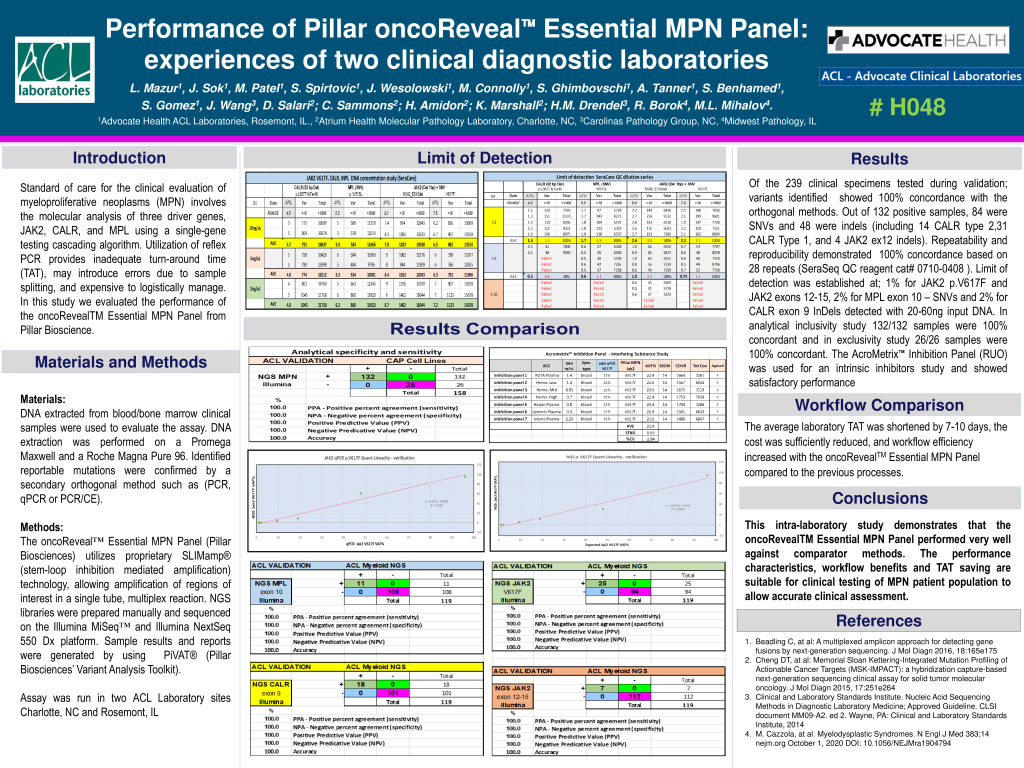
Advocate Health ACL Laboratories and Atrium Health Molecular Pathology jointly validated Pillar’s oncoReveal® Essential MPN Panel across two laboratory sites, replacing the single-gene cascading algorithm conventionally used to test JAK2, CALR and MPL in myeloproliferative neoplasms — a workflow that lengthens turnaround, risks errors from sample splitting, and is expensive to manage. Two hundred thirty-nine clinical blood and bone marrow specimens were sequenced on Illumina MiSeq and NextSeq 550 Dx with PiVAT® reporting, and every identified variant was confirmed by an orthogonal PCR, qPCR or PCR/CE method. Concordance was 100%, repeatability and reproducibility were 100%, and average turnaround shortened by 7–10 days.
Performance of oncoReveal MLH1 & MGMT Methylation Panel from Pillar Bioscience
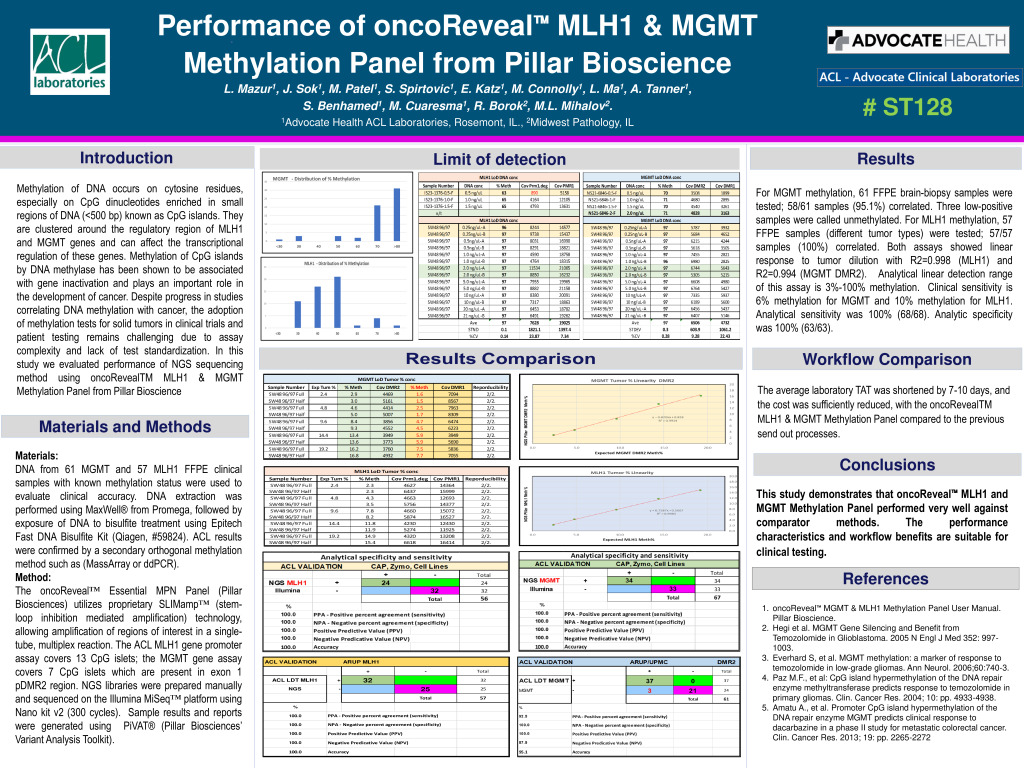
Advocate Health ACL Laboratories evaluated Pillar’s oncoReveal® MLH1 & MGMT Methylation Panel, a bisulfite-based NGS assay using SLIMamp® chemistry to quantify promoter CpG island methylation — the gene-silencing marker that predicts temozolomide response in glioma and supports Lynch syndrome workup. DNA from 61 MGMT and 57 MLH1 FFPE clinical samples of known methylation status was bisulfite converted, sequenced on the Illumina MiSeq, analyzed with PiVAT®, and confirmed by orthogonal MassArray or ddPCR. MLH1 correlated 100% and MGMT 95.1%, with laboratory turnaround shortened by 7–10 days versus the prior send-out process.
Evaluation of the QIAxcel Connect system for NGS library prep QC analysis: experience from a clinical diagnostic laboratory
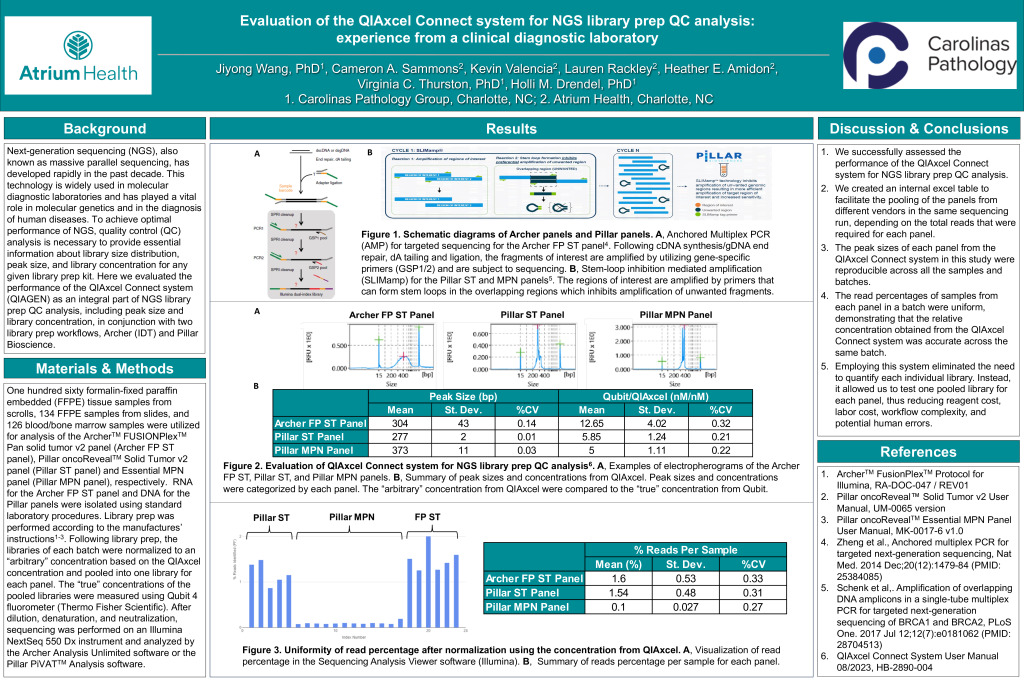
Carolinas Pathology Group and Atrium Health evaluated the QIAGEN QIAxcel Connect system for library quantification and quality control across three NGS workflows: Archer’s FUSIONPlex Pan Solid Tumor v2, Pillar’s oncoReveal® Solid Tumor v2, and Pillar’s oncoReveal® Essential MPN panel. Libraries from 160 FFPE scrolls, 134 FFPE slides, and 126 blood or bone marrow specimens were normalized on QIAxcel concentrations, pooled per panel, and sequenced on the Illumina NextSeq 550 Dx. Pillar panels showed the tightest peak-size reproducibility, and the approach removed the need to quantify every individual library.
JAK2 Exon 12-15, CALR and MPL Essential MPN NGS Panel
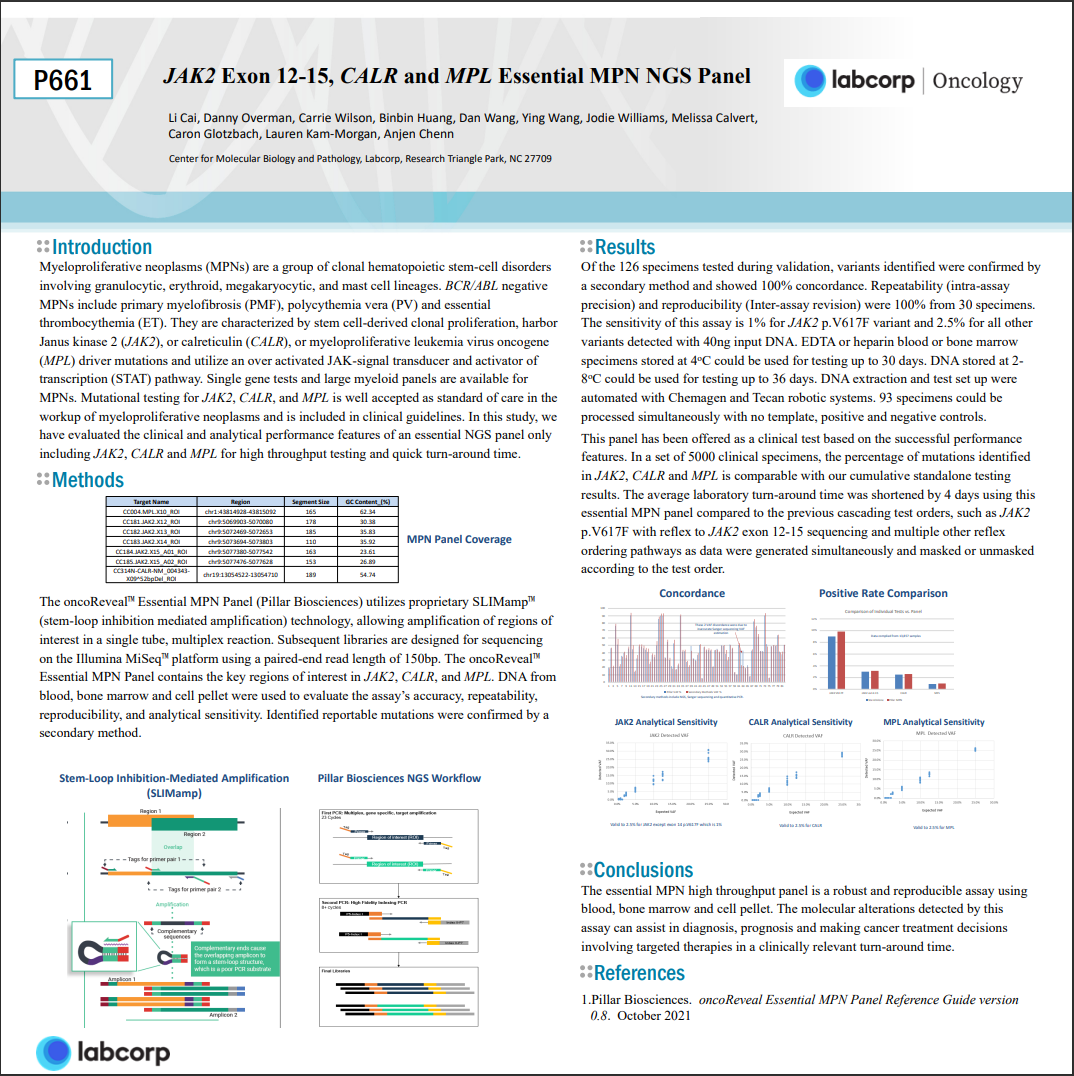
Labcorp’s Center for Molecular Biology and Pathology validated Pillar’s oncoReveal® Essential MPN Panel — a single-tube SLIMamp® assay covering JAK2 exons 12–15, CALR, and MPL — as a high-throughput clinical test for BCR/ABL-negative myeloproliferative neoplasms including polycythemia vera, essential thrombocythemia, and primary myelofibrosis. Across 126 blood, bone marrow, and cell pellet specimens every reportable mutation was confirmed by a secondary method, giving 100% concordance, with 100% repeatability and reproducibility over 30 specimens. The panel is now offered clinically, and average laboratory turnaround shortened by four days versus cascading reflex orders.
Abnormal TP53 Predicts Risk of Progression in Patients with Barrett’s Esophagus Regardless of a Diagnosis of Dysplasia
Publication Source: Gastroenterology
TBC