
Validation and Performance of Quantitative BRCA1 and RAD51C Promoter Hypermethylation Testing in Breast and Ovarian Cancers
Publication Source: The Journal of Molecular Diagnostics
TBC
Utilizing Pillar Biosciences’ Rapid oncoReveal 4-Gene Methylation Panel to Guide PARPi Therapy in Breast Cancer Patients
Event Name: AMP 2024
TBC
Assessment of Homologous Repair Deficiency status in Triple Negative Breast and Ovarian Carcinoma using Genetic and Epigenetic Next Generation Sequencing Assays
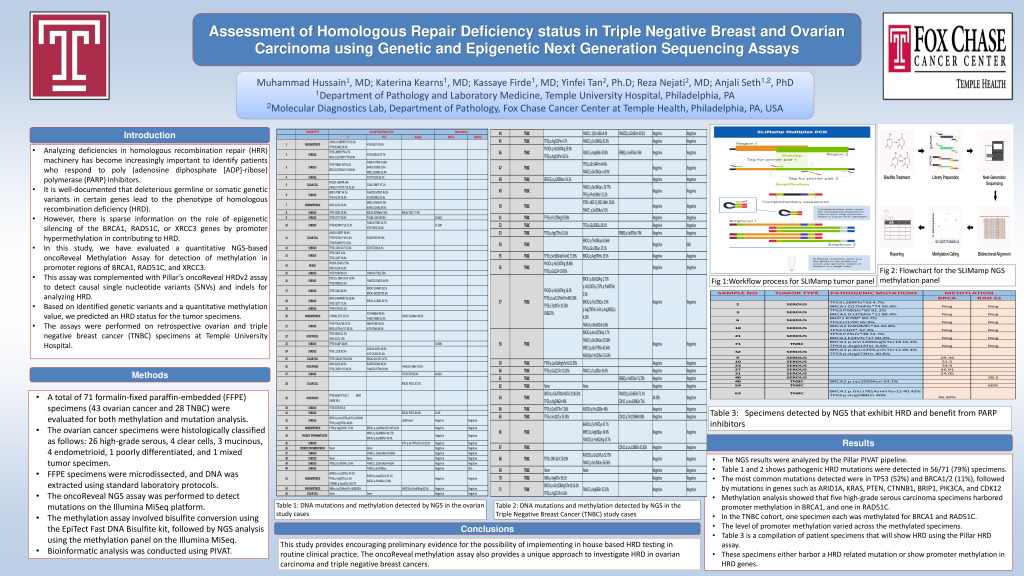
Temple University Hospital and Fox Chase Cancer Center paired Pillar’s oncoReveal® HRDv2 mutation panel with a quantitative oncoReveal® methylation assay to assess homologous recombination deficiency (HRD) — the phenotype predicting PARP inhibitor response — in retrospective ovarian and triple negative breast cancer (TNBC) specimens. Seventy-one FFPE samples (43 ovarian, 28 TNBC) were microdissected and tested for both pathogenic variants and BRCA1, RAD51C, and XRCC3 promoter hypermethylation on the Illumina MiSeq with PiVAT® analysis. Pathogenic HRD mutations appeared in 56 of 71 specimens (79%), and methylation flagged additional HRD-positive cases that mutation testing alone would have missed.
Looking Deeper into HRD to Inform PARP Inhibitor Therapy: Building the Case for NGS Methylation Testing

Publishing Entity: GenomeWeb | Precision Medicine Online
Combining High-Throughput, High-Resolution Targeted Spatial Microdissection with SLIMamp® NGS Chemistry for Sensitive and Accurate Molecular Characterization on Low-Quantity, Low-Quality FFPE Samples
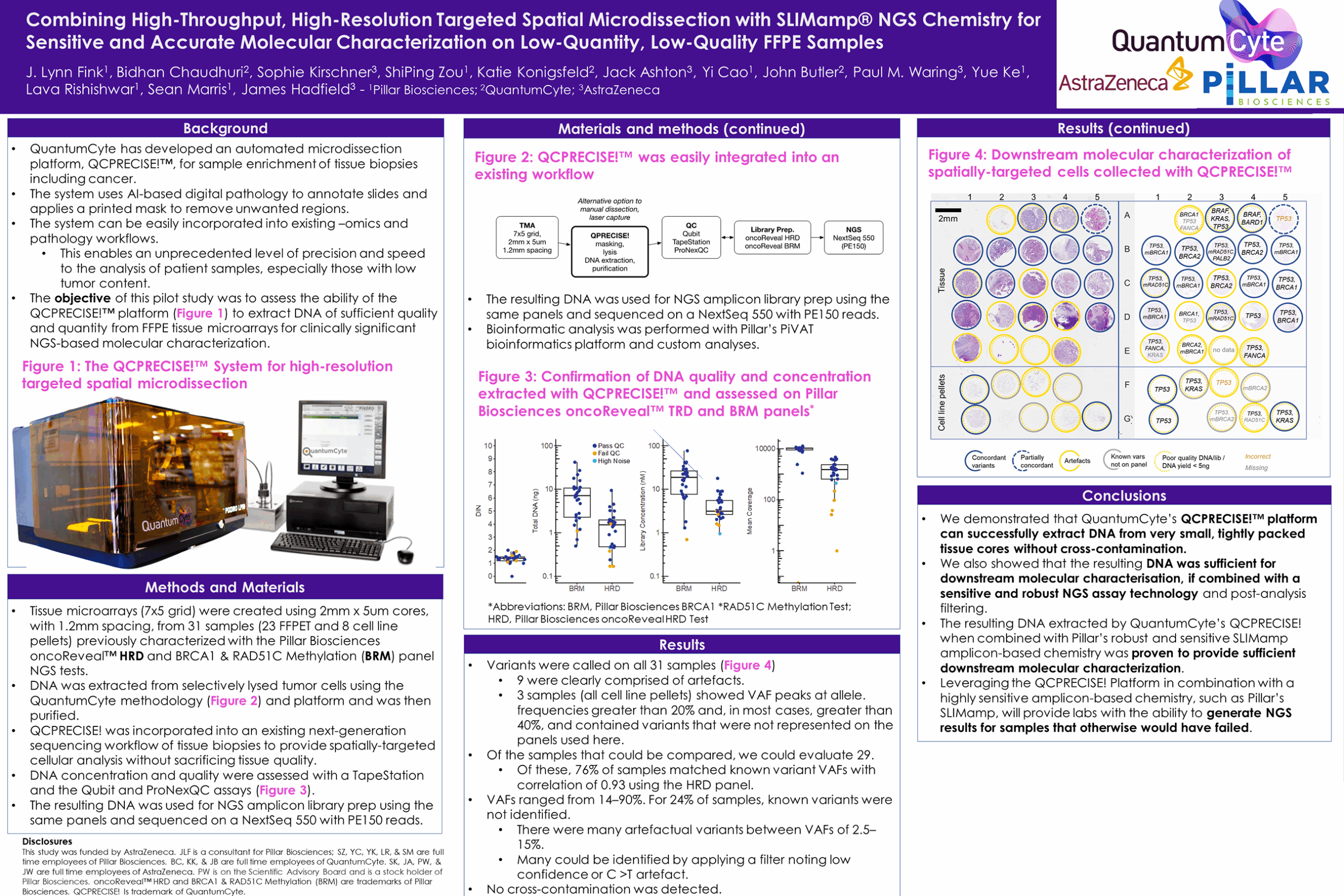
Pillar, QuantumCyte and AstraZeneca tested whether AI-guided spatial microdissection can rescue FFPE samples that would otherwise fail NGS. QuantumCyte’s QCPRECISE!™ platform uses digital pathology to annotate slides and a printed mask to remove unwanted regions, extracting DNA from selectively lysed tumor cells in 2 mm tissue microarray cores taken from 31 samples previously characterized on Pillar’s oncoReveal® HRD and BRCA1 & RAD51C methylation panels. Libraries were sequenced on the NextSeq 550 and analyzed in PiVAT®. Variants were called on all 31 samples with no cross-contamination, and 76% of evaluable samples matched known variant allele frequencies at 0.93 correlation.
Evaluation of Homologous Repair Deficiency Status in Ovarian Carcinoma using In House Next Generation Sequencing Panels
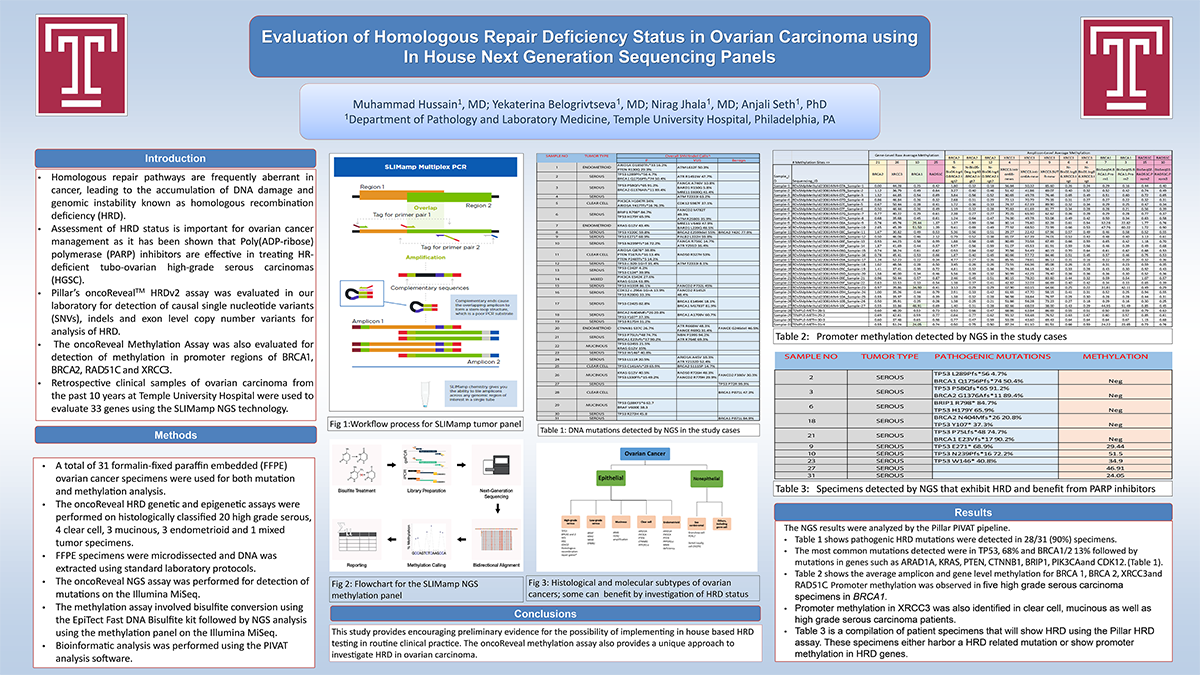
Temple University Hospital evaluated Pillar’s oncoReveal® HRDv2 assay together with the oncoReveal® methylation assay for assessing homologous recombination deficiency (HRD) in ovarian carcinoma, the marker predicting PARP inhibitor benefit in tubo-ovarian high-grade serous carcinoma. Thirty-one retrospective FFPE ovarian specimens — 20 high-grade serous, 4 clear cell, 3 mucinous, 3 endometrioid and 1 mixed — were microdissected and run for SNVs, indels and exon-level copy number variants across 33 genes on the Illumina MiSeq, plus BRCA1, BRCA2, RAD51C and XRCC3 promoter methylation, with PiVAT® analysis. Pathogenic HRD mutations appeared in 28 of 31 specimens (90%), and methylation identified further HRD-positive cases.
Exquisitely Platinum-Sensitive Triple-Negative Breast Cancer, Time for BRCA Methylation Testing?
Publication Source: American Society of Clinical Oncology
TBC