Detecting Contamination in Cell-free DNA Sequencing Libraries using Germline Markers
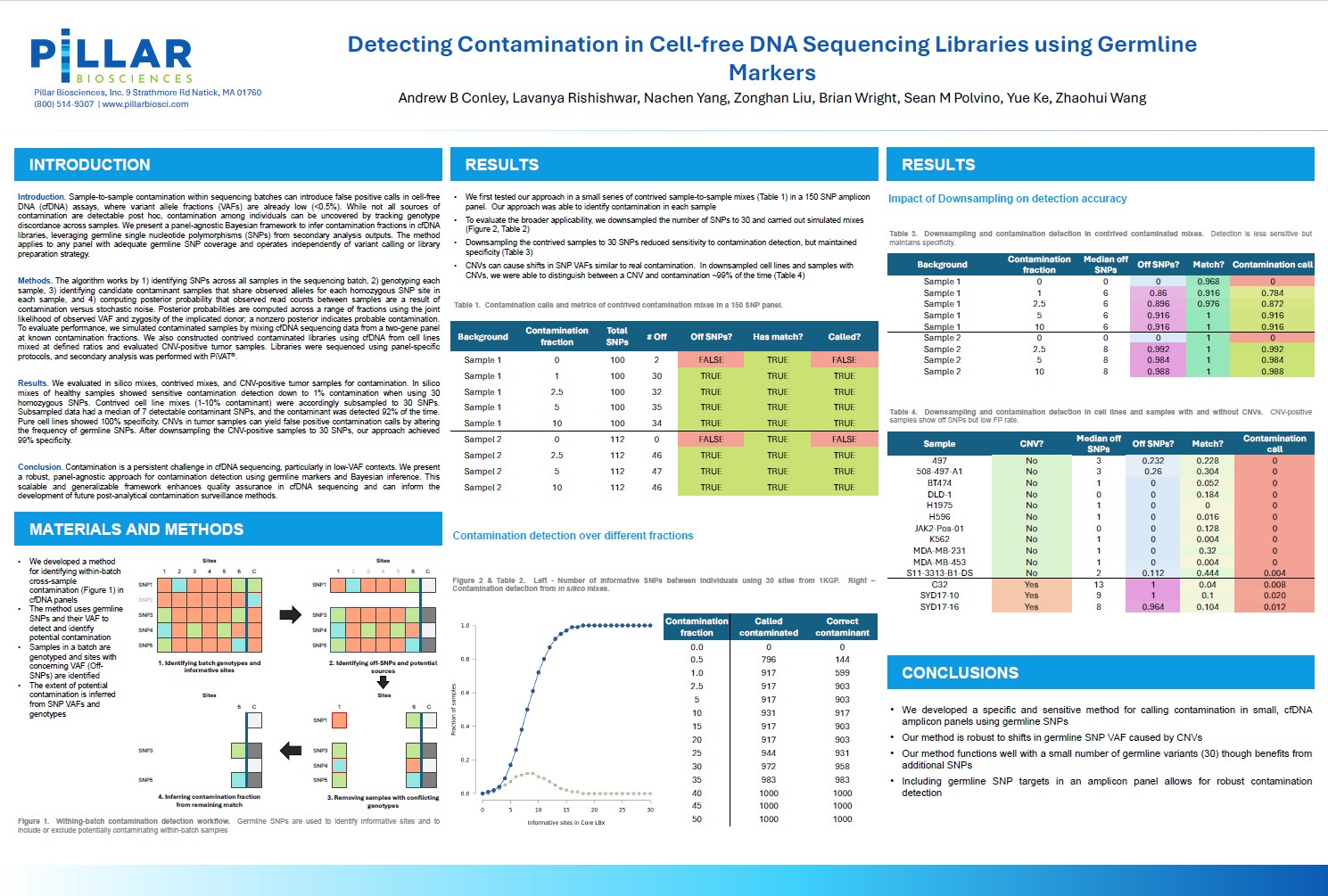
Pillar developed a panel-agnostic Bayesian method to detect sample-to-sample contamination within cell-free DNA (cfDNA) sequencing batches, where variant allele fractions below 0.5% make false positive calls especially costly. The algorithm genotypes germline single nucleotide polymorphisms (SNPs) across a batch, flags sites with discordant allele fractions, and computes the posterior probability that observed read counts reflect contamination rather than stochastic noise. Across in silico mixes, contrived cell line mixes, and CNV-positive tumor samples it detected contamination down to 1% using 30 homozygous SNPs while holding 99–100% specificity.
Comparative Performance of Targeted and Comprehensive Somatic NGS Panels in Paired Tumor and Liquid Biopsy Samples from a Prospective Solid Tumor Cohort
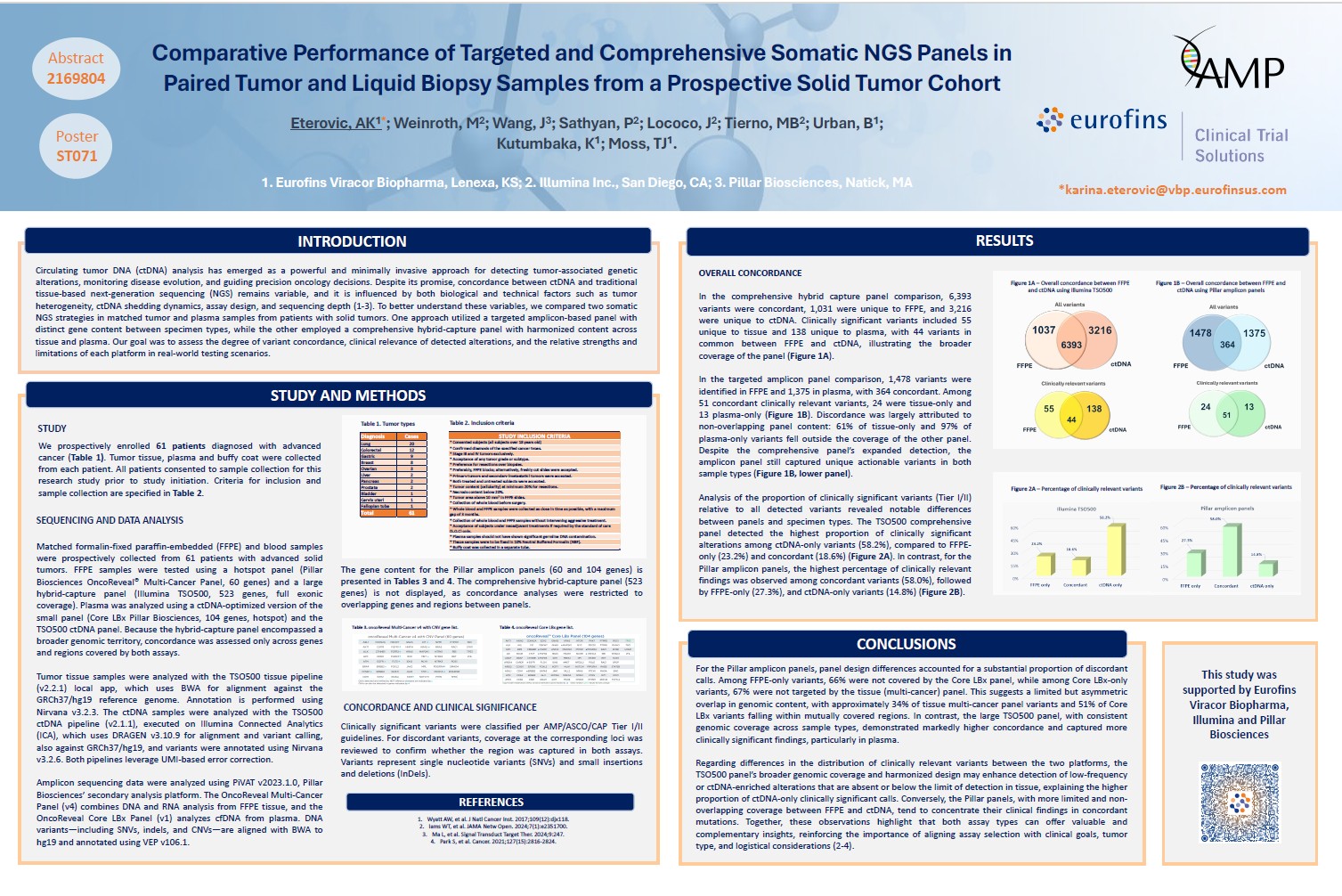
Eurofins Viracor Biopharma, with Illumina and Pillar, prospectively enrolled 61 patients with advanced solid tumors and tested matched FFPE tissue and plasma using Pillar’s amplicon panels (oncoReveal® Multi-Cancer, 60 genes, tissue; Core LBx, 104 genes, ctDNA) alongside Illumina’s TSO500 hybrid-capture panels (523 genes). The comprehensive panel showed higher tissue–plasma concordance, largely because its gene content is harmonized across specimen types while the Pillar tissue and liquid biopsy panels target different gene sets. Even so, 58.0% of Pillar’s concordant calls were clinically significant Tier I/II variants — the highest such proportion in the study.
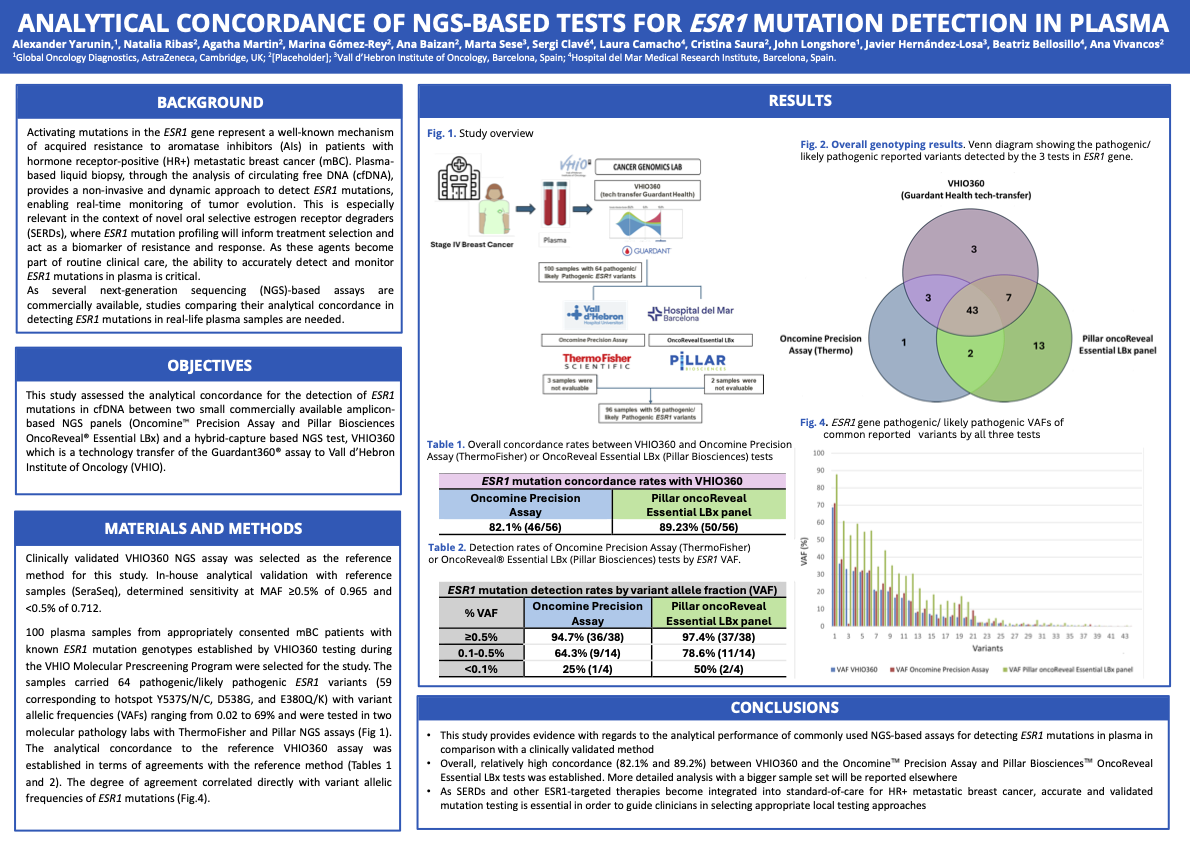
Analytical Concordance of NGS-based Tests for ESR1 Mutation Detection in Plasma