
Utilizing Pillar Biosciences’ Rapid oncoReveal 4-Gene Methylation Panel to Guide PARPi Therapy in Breast Cancer Patients
Event Name: AMP 2024
TBC
Performance of oncoReveal MLH1 & MGMT Methylation Panel from Pillar Bioscience
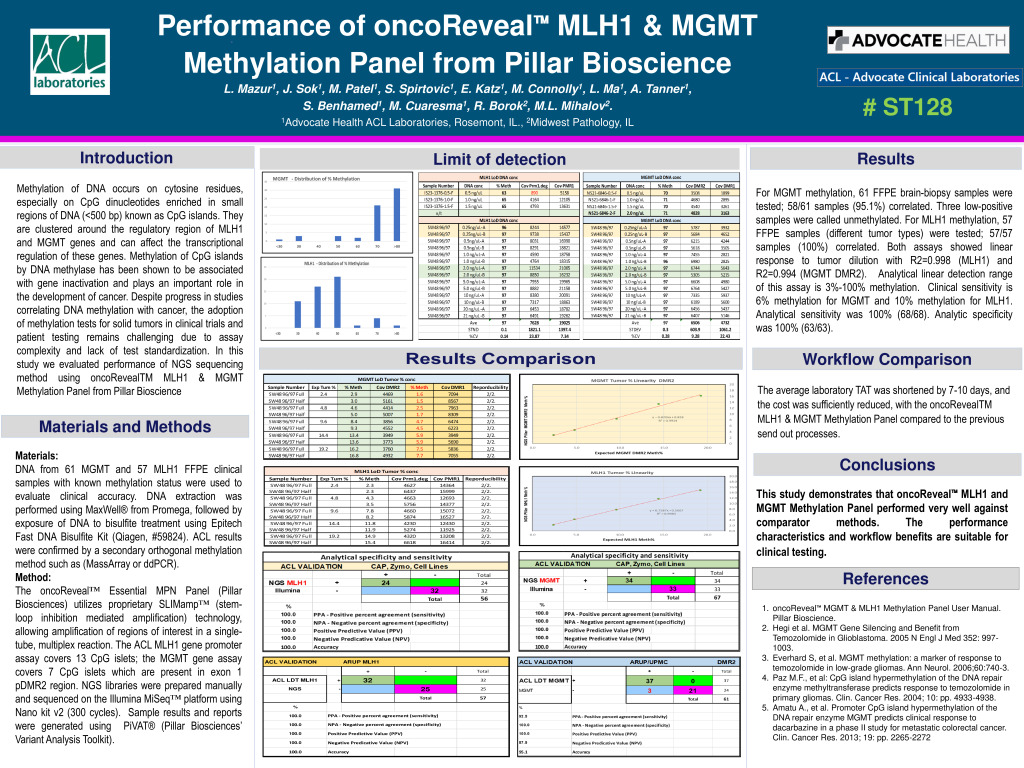
Advocate Health ACL Laboratories evaluated Pillar’s oncoReveal® MLH1 & MGMT Methylation Panel, a bisulfite-based NGS assay using SLIMamp® chemistry to quantify promoter CpG island methylation — the gene-silencing marker that predicts temozolomide response in glioma and supports Lynch syndrome workup. DNA from 61 MGMT and 57 MLH1 FFPE clinical samples of known methylation status was bisulfite converted, sequenced on the Illumina MiSeq, analyzed with PiVAT®, and confirmed by orthogonal MassArray or ddPCR. MLH1 correlated 100% and MGMT 95.1%, with laboratory turnaround shortened by 7–10 days versus the prior send-out process.
Assessment of Homologous Repair Deficiency status in Triple Negative Breast and Ovarian Carcinoma using Genetic and Epigenetic Next Generation Sequencing Assays
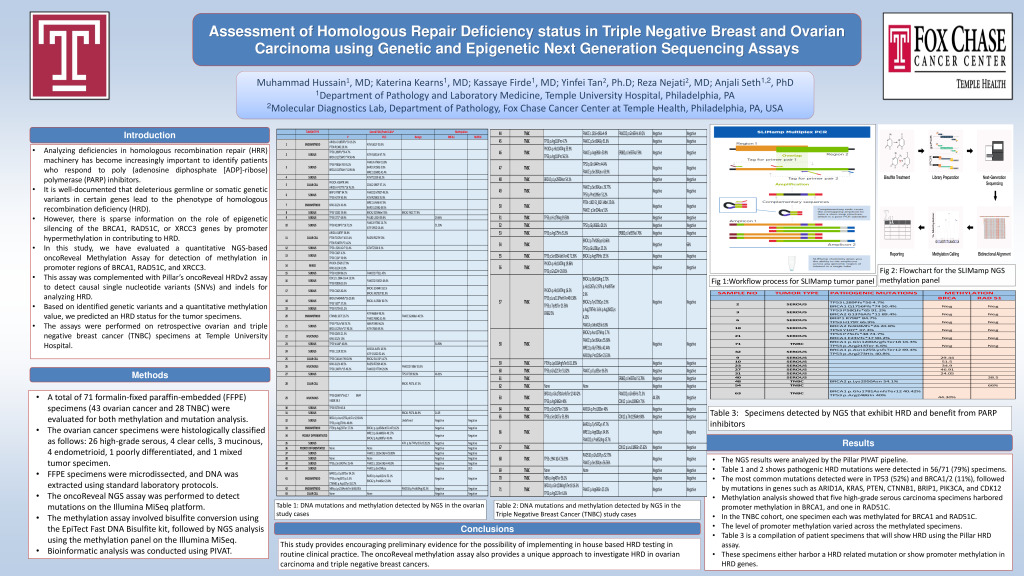
Temple University Hospital and Fox Chase Cancer Center paired Pillar’s oncoReveal® HRDv2 mutation panel with a quantitative oncoReveal® methylation assay to assess homologous recombination deficiency (HRD) — the phenotype predicting PARP inhibitor response — in retrospective ovarian and triple negative breast cancer (TNBC) specimens. Seventy-one FFPE samples (43 ovarian, 28 TNBC) were microdissected and tested for both pathogenic variants and BRCA1, RAD51C, and XRCC3 promoter hypermethylation on the Illumina MiSeq with PiVAT® analysis. Pathogenic HRD mutations appeared in 56 of 71 specimens (79%), and methylation flagged additional HRD-positive cases that mutation testing alone would have missed.