
To UMI or not to UMI: Obtaining robust low-frequency variant identification for liquid biopsy with a SLIMamp-based NGS chemistry without molecular barcoding
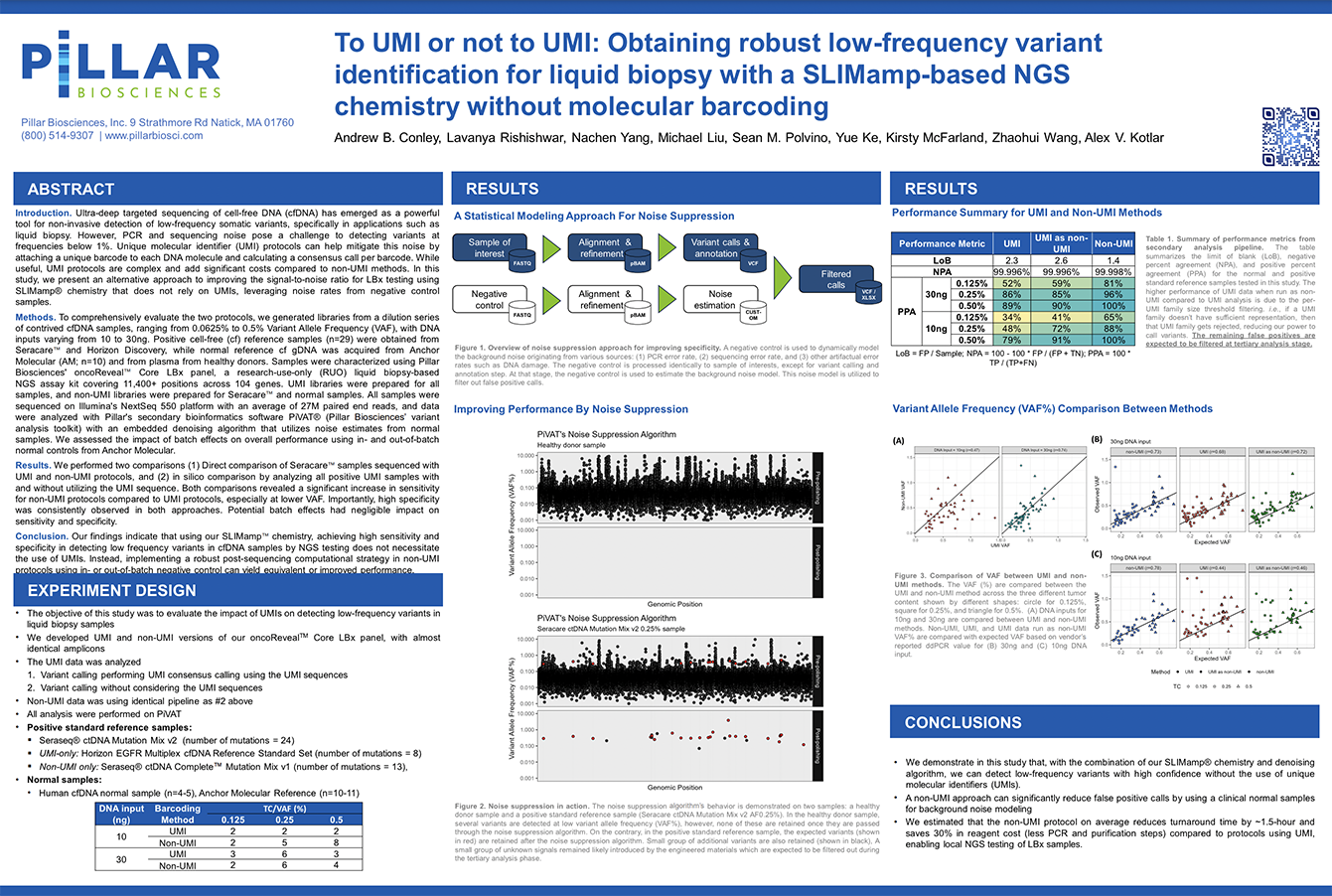
Pillar tested directly whether unique molecular identifiers (UMIs) are necessary for low-frequency variant detection in liquid biopsy, building UMI and non-UMI versions of the 104-gene oncoReveal® Core LBx panel with nearly identical amplicons. Contrived cell-free DNA dilutions from 0.0625% to 0.5% variant allele frequency at 10–30 ng input were sequenced on the Illumina NextSeq 550 and analyzed in PiVAT® using a denoising algorithm that models background noise from negative control samples. The non-UMI protocol was more sensitive than the UMI protocol at every allele frequency tested, while holding specificity above 99.99%.
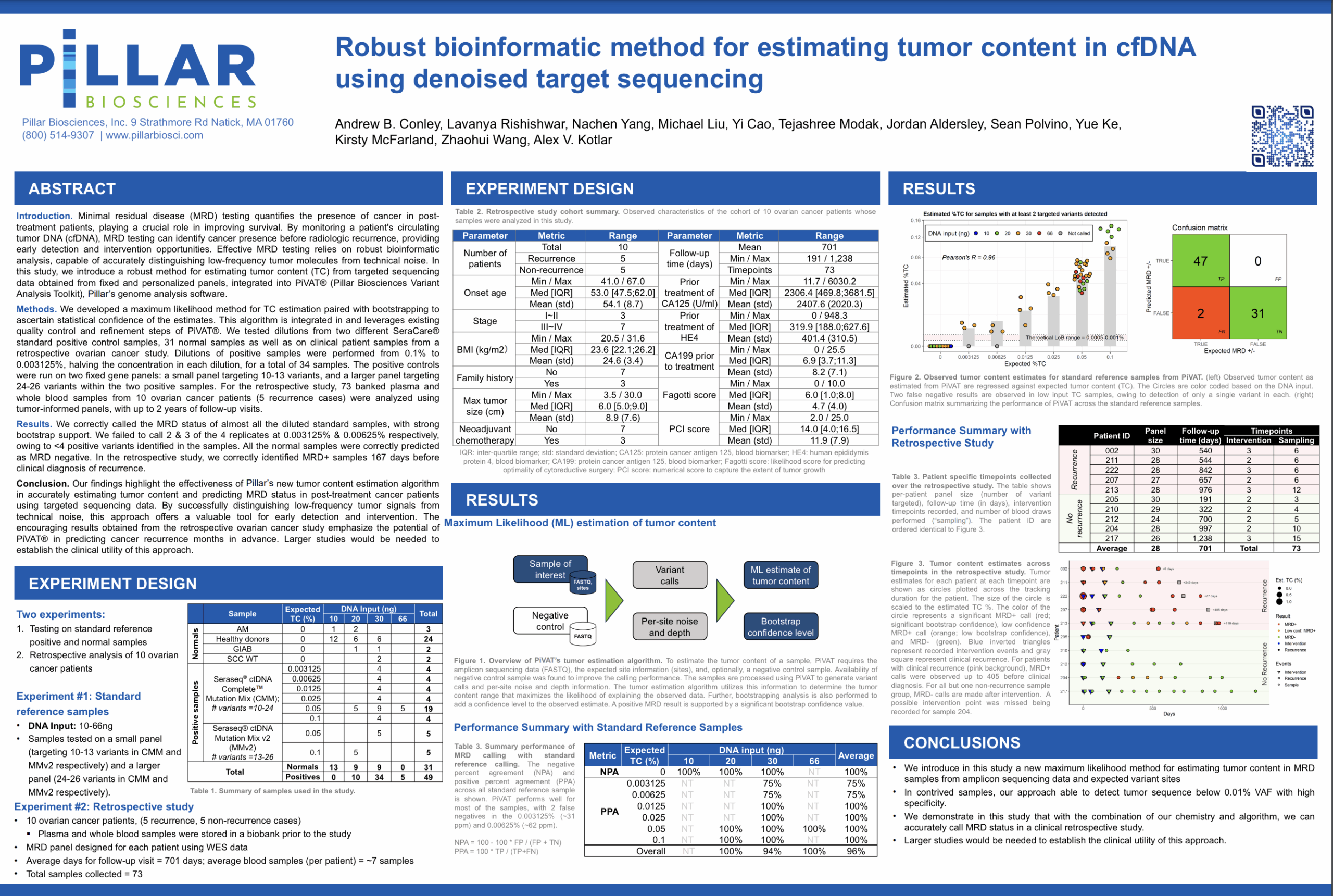
Robust bioinformatic method for estimating tumor content in cfDNAusing denoised target sequencing
Copy number amplifications are the hardest alteration class to call from cell-free DNA, usually demanding high circulating tumor DNA and broad genomic coverage. Pillar built oncoCNA, a Bayesian non-parametric caller inside PiVAT®, and tested it on Seraseq® ctDNA reference material across allele frequencies from 0.25% to 5% at 10, 20 and 30 ng input on the 104-gene oncoReveal® Core LBx panel. Performance was comparable at 10 ng and 30 ng, and the choice of negative control mattered more than input amount — clinical normal samples gave 100% negative percent agreement where synthetic normals did not.