
From Innovation to Implementation: Redefining Breast Cancer Management with Liquid Biopsy
Event Name: AMP Europe 2026
TBC
Rapid Detection of Actionable Biomarkers in Liquid Biopsy from Non-Small Cell Lung Cancer and Breast Cancer Using Targeted NGS-Based Assays
Event Name: AMP 2025
TBC
Improving Access to NGS-Based Liquid Biopsy Testing for Advanced Cancers
Publishing Entity: GenomeWeb | Precision Medicine Online
TBC
Detecting Ultra-Low Frequency ESR1 Mutations in Liquid Biopsy Samples Using the oncoReveal Essential LBx Panel
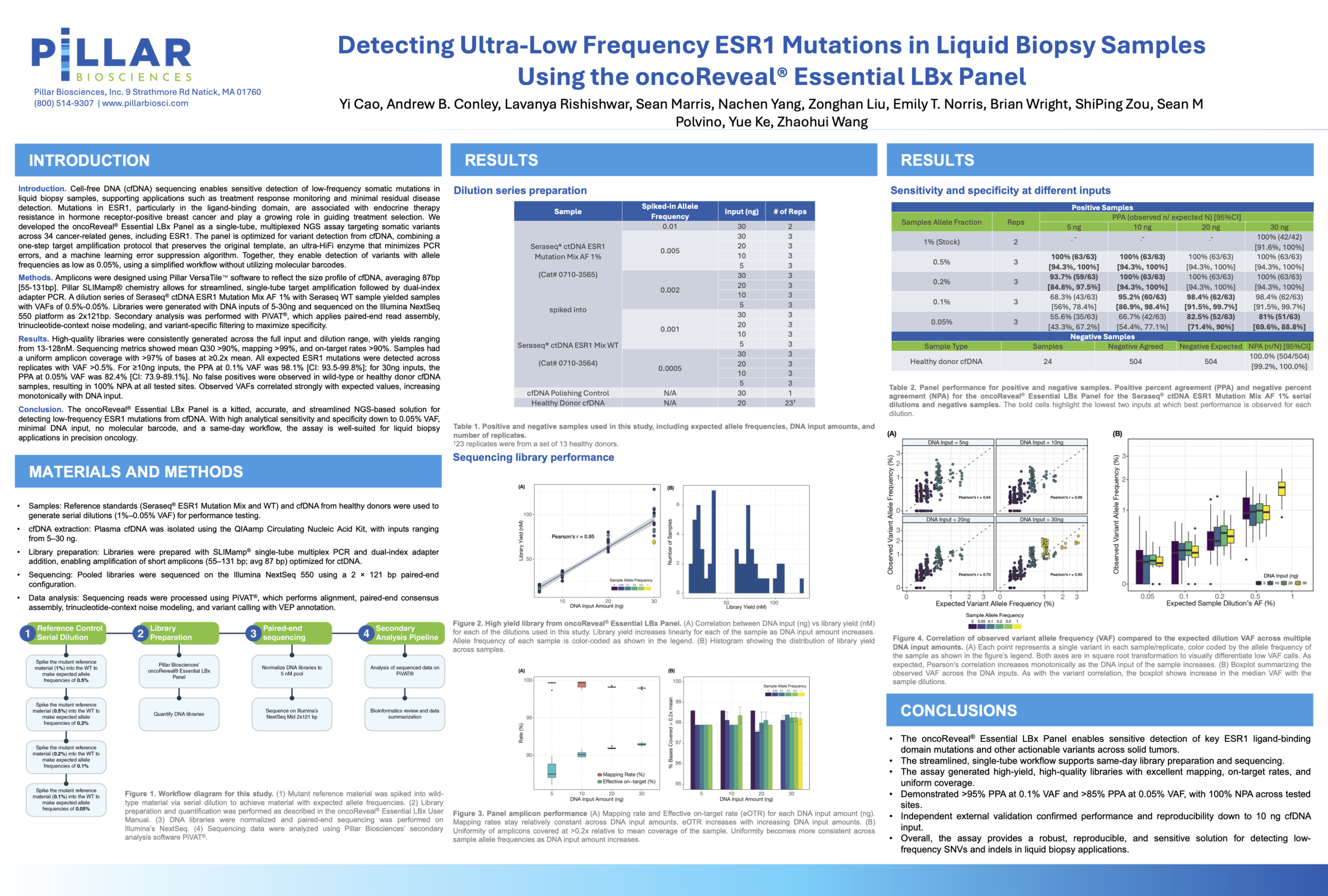
The oncoReveal® Essential LBx Panel is a single-tube, 34-gene amplicon-based NGS liquid biopsy assay built on SLIMamp® chemistry. Pillar tested it on Seraseq® ctDNA ESR1 reference standards diluted to 0.05% variant allele frequency (VAF) from 5–30 ng of plasma cell-free DNA (cfDNA), sequenced on the Illumina NextSeq 550 and analyzed with PiVAT® software. It detected these endocrine-therapy-resistance mutations in HR-positive breast cancer with 98.4% PPA at 0.1% VAF and 100% NPA — no molecular barcodes (UMIs) required.
Detecting Contamination in Cell-free DNA Sequencing Libraries using Germline Markers
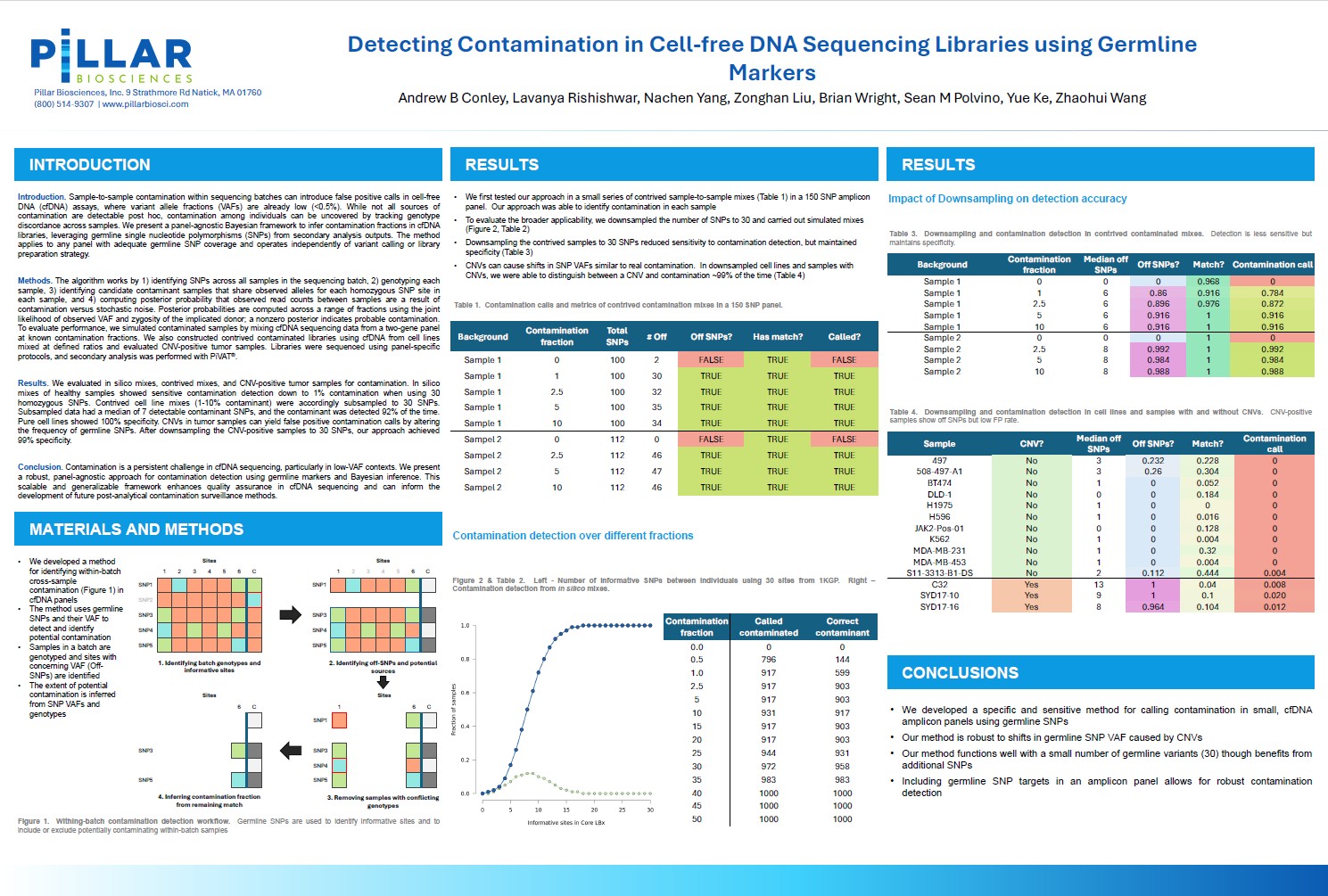
Pillar developed a panel-agnostic Bayesian method to detect sample-to-sample contamination within cell-free DNA (cfDNA) sequencing batches, where variant allele fractions below 0.5% make false positive calls especially costly. The algorithm genotypes germline single nucleotide polymorphisms (SNPs) across a batch, flags sites with discordant allele fractions, and computes the posterior probability that observed read counts reflect contamination rather than stochastic noise. Across in silico mixes, contrived cell line mixes, and CNV-positive tumor samples it detected contamination down to 1% using 30 homozygous SNPs while holding 99–100% specificity.
Comparative Performance of Targeted and Comprehensive Somatic NGS Panels in Paired Tumor and Liquid Biopsy Samples from a Prospective Solid Tumor Cohort
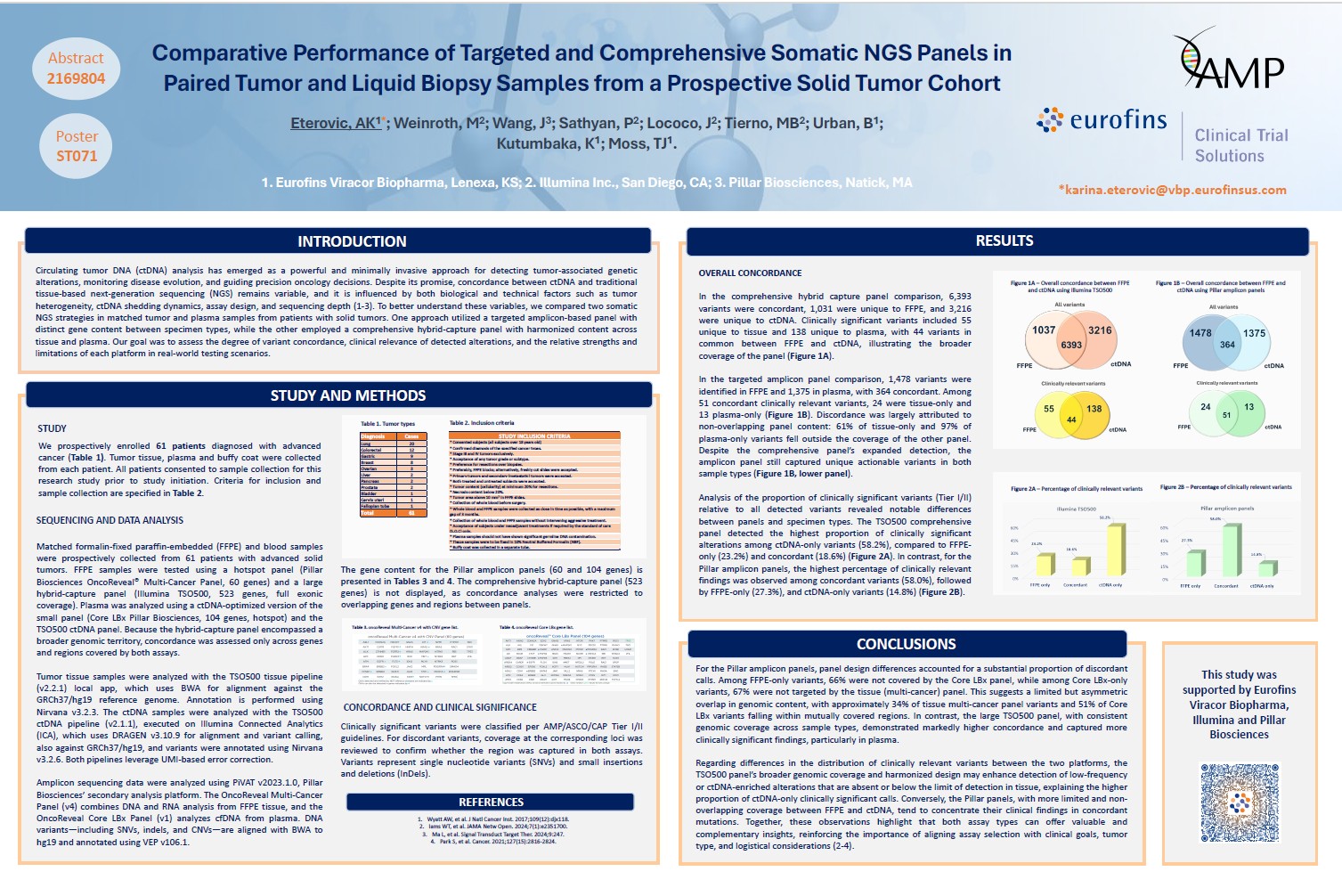
Eurofins Viracor Biopharma, with Illumina and Pillar, prospectively enrolled 61 patients with advanced solid tumors and tested matched FFPE tissue and plasma using Pillar’s amplicon panels (oncoReveal® Multi-Cancer, 60 genes, tissue; Core LBx, 104 genes, ctDNA) alongside Illumina’s TSO500 hybrid-capture panels (523 genes). The comprehensive panel showed higher tissue–plasma concordance, largely because its gene content is harmonized across specimen types while the Pillar tissue and liquid biopsy panels target different gene sets. Even so, 58.0% of Pillar’s concordant calls were clinically significant Tier I/II variants — the highest such proportion in the study.
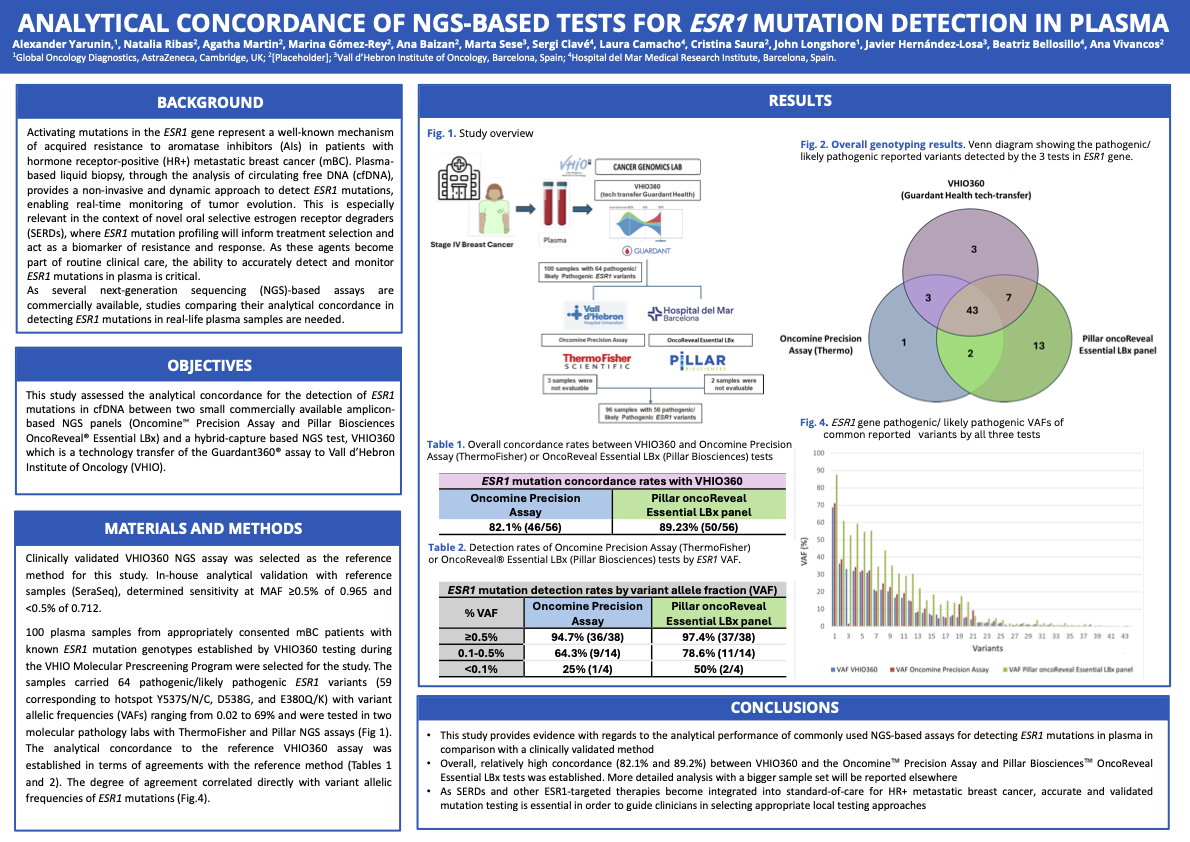
Analytical Concordance of NGS-based Tests for ESR1 Mutation Detection in Plasma
Accelerating Access to Liquid Biopsy Testing with Kitted NGS Solutions
Publishing Entity: GenomeWeb | Precision Medicine Online
TBC
Combining State Space Models and Statistical Decision Theory forPrecision Profiling of Thalassemia
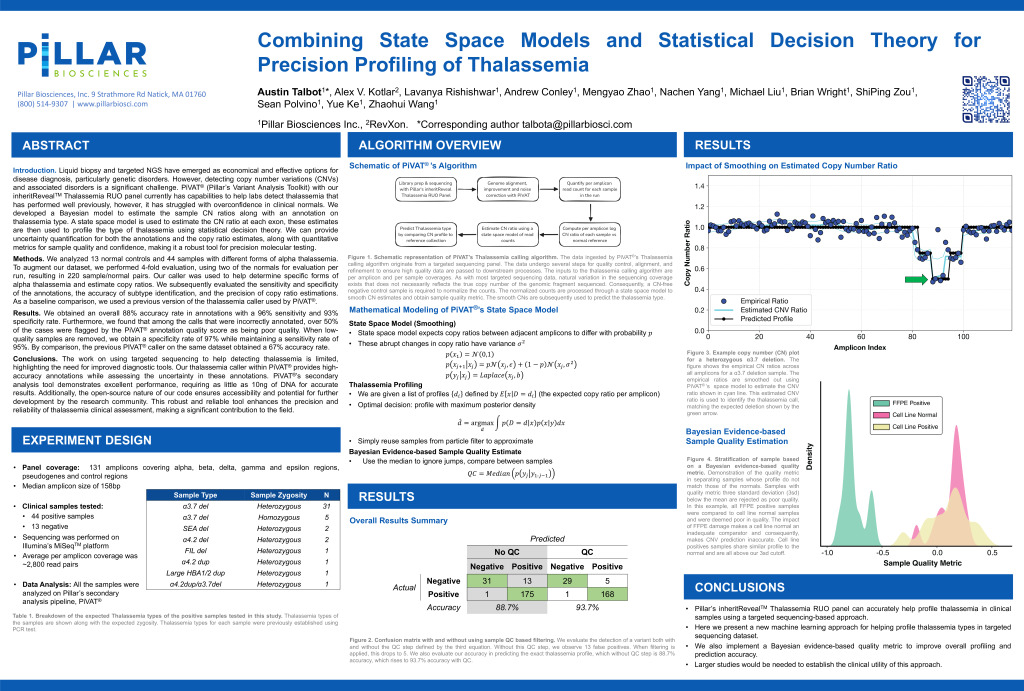
Pillar developed a Bayesian caller inside PiVAT® that pairs a state space model for copy number estimation with statistical decision theory to identify alpha thalassemia subtypes from the inheritReveal™ Thalassemia research-use panel. Thirteen normal controls and 44 alpha thalassemia samples were expanded to 220 sample/normal pairs by four-fold evaluation and sequenced on the Illumina MiSeq at roughly 2,800 read pairs per amplicon. The new caller reached 88% annotation accuracy with 96% sensitivity and 93% specificity, rising to 93.7% accuracy once its own quality metric filtered poor samples, against 67% for the previous PiVAT® caller.
Highly Accurate and Automated (RUO) NGS Assays for Efficient Localized LBx and TBx Testing in Oncology
Event Name: AMP 2023
TBC