
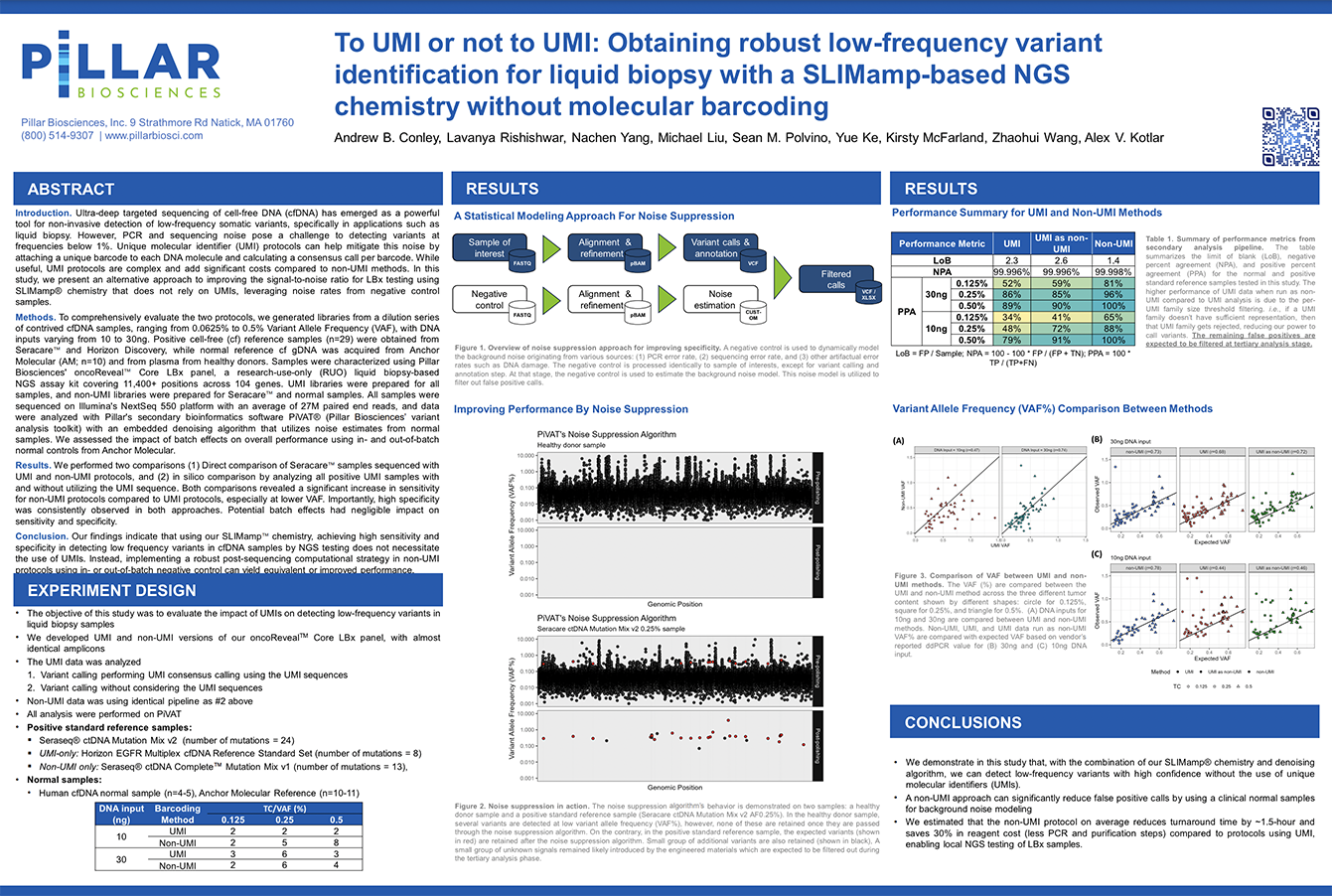
To UMI or not to UMI: Obtaining robust low-frequency variant identification for liquid biopsy with a SLIMamp-based NGS chemistry without molecular barcoding
Robust bioinformatic method for estimating tumor content in cfDNAusing denoised target sequencing
Copy number amplifications are the hardest alteration class to call from cell-free DNA, usually demanding high circulating tumor DNA and broad genomic coverage. Pillar built oncoCNA, a Bayesian non-parametric caller inside PiVAT®, and tested it on Seraseq® ctDNA reference material across allele frequencies from 0.25% to 5% at 10, 20 and 30 ng input on the 104-gene oncoReveal® Core LBx panel. Performance was comparable at 10 ng and 30 ng, and the choice of negative control mattered more than input amount — clinical normal samples gave 100% negative percent agreement where synthetic normals did not.
Detection of Microsatellite Instability (MSI) Using oncoReveal Core LBx, a Multiplexed, Single Tube, Liquid Biopsy Assay
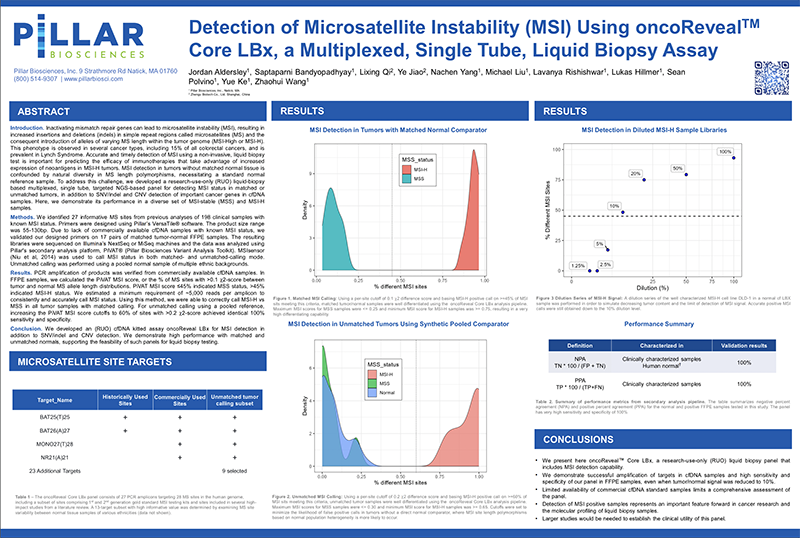
Pillar added microsatellite instability (MSI) detection to the research-use oncoReveal® Core LBx liquid biopsy panel alongside SNV, indel and copy number calling, supporting immunotherapy selection — MSI-high tumors respond to checkpoint inhibitors, and the phenotype appears in roughly 15% of colorectal cancers and across Lynch syndrome. Twenty-seven amplicons covering 28 microsatellite sites were validated on 17 matched tumor-normal FFPE pairs, sequenced on Illumina NextSeq or MiSeq and scored in PiVAT® using MSIsensor. Sensitivity and specificity were 100% in both matched and unmatched calling modes, with correct calls holding down to 10% tumor dilution.
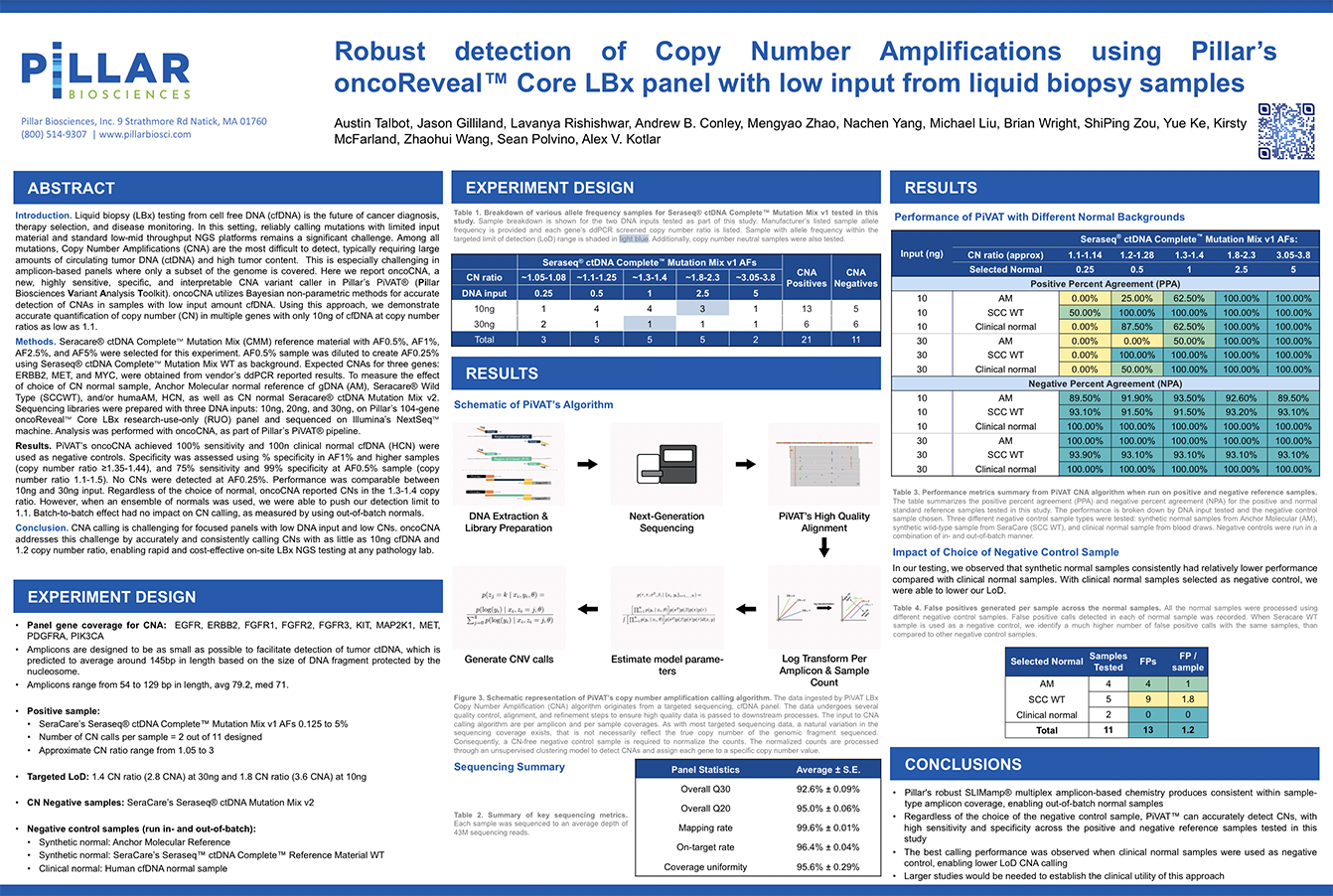
Robust detection of Copy Number Amplifications using Pillar’s oncoReveal™ Core LBx panel with low input from liquid biopsy samples
Copy number amplifications are the hardest alteration class to call from cell-free DNA, usually demanding high circulating tumor DNA and broad genomic coverage. Pillar built oncoCNA, a Bayesian non-parametric caller inside PiVAT®, and tested it on Seraseq® ctDNA reference material across allele frequencies from 0.25% to 5% at 10, 20 and 30 ng input on the 104-gene oncoReveal® Core LBx panel. Performance was comparable at 10 ng and 30 ng, and the choice of negative control mattered more than input amount — clinical normal samples gave 100% negative percent agreement where synthetic normals did not.
Robust Low Frequency Somatic Variant Detection in cfDNA Using a SLIMamp® Based liquid Biopsy Assay
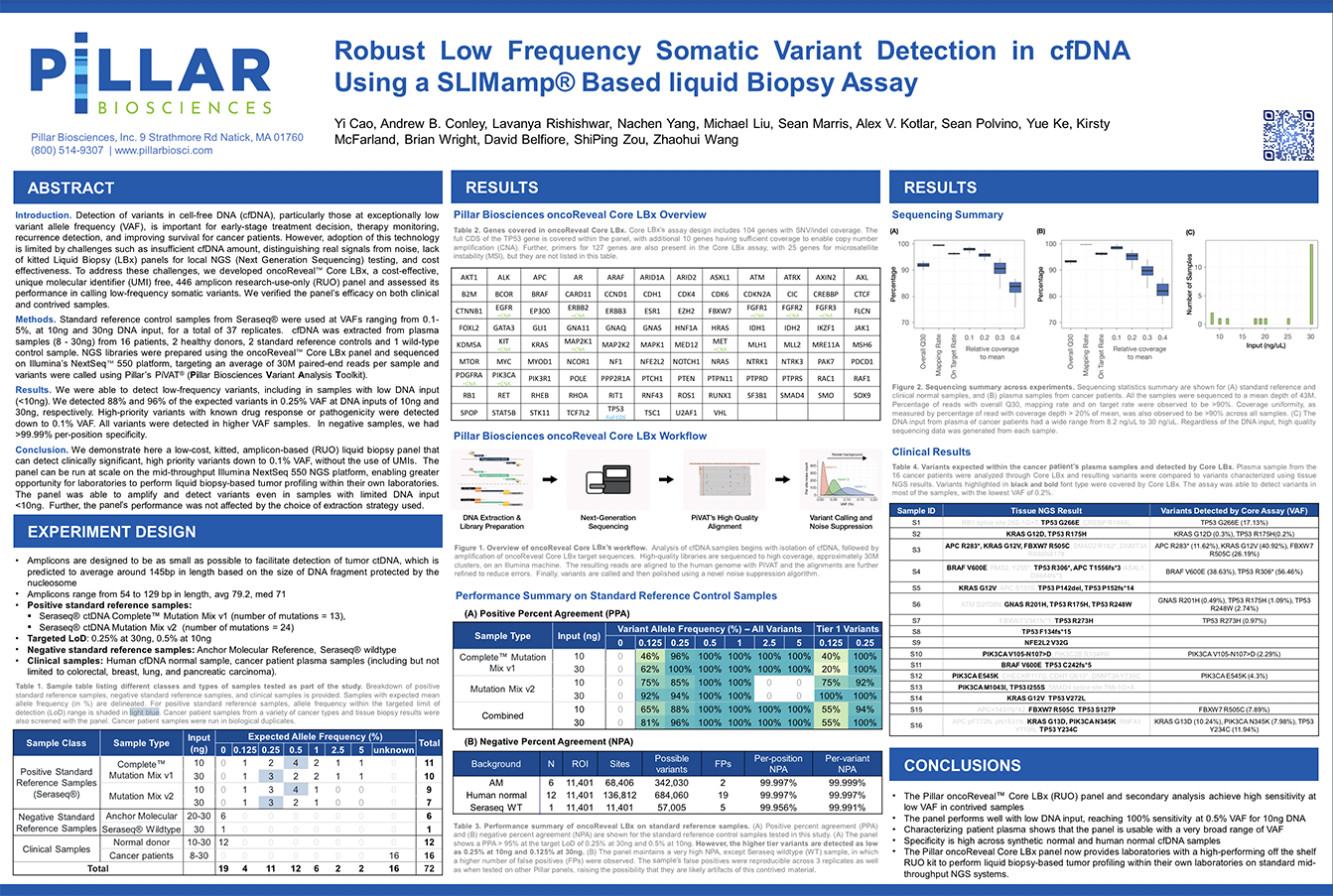
Pillar assessed the oncoReveal® Core LBx panel — a UMI-free, 446-amplicon, 104-gene research-use liquid biopsy kit — for detecting low-frequency somatic variants in cell-free DNA. Seraseq® reference controls from 0.1% to 5% variant allele frequency at 10 and 30 ng input were run across 37 replicates alongside plasma from 16 cancer patients, two healthy donors and wild-type controls, sequenced on the Illumina NextSeq 550 with PiVAT® analysis. The panel detected 88% of expected variants at 0.25% VAF with 10 ng input and 96% with 30 ng, found high-priority variants down to 0.1%, and held per-position specificity above 99.99%.
oncoRevealTM Fusion LBx: Single-tube multiplexed PCR-based NGS assay for detection of multiple gene fusions from cell free RNA
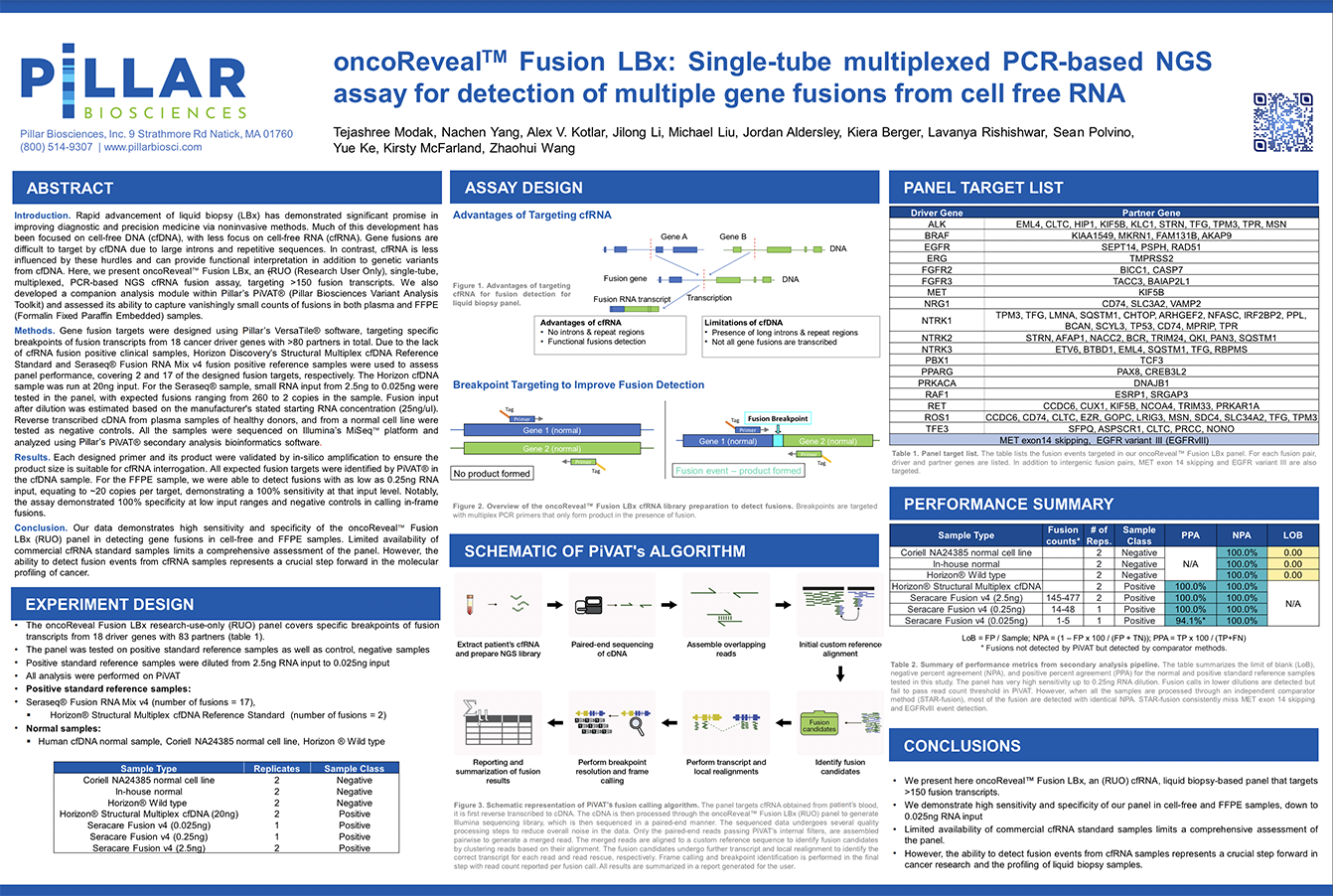
Pillar developed oncoReveal® Fusion LBx, a research-use single-tube multiplexed PCR NGS assay detecting more than 150 fusion transcripts from cell-free RNA (cfRNA) — an analyte that avoids the long introns and repeat regions making fusions hard to catch in cell-free DNA. The panel targets breakpoints across 18 driver genes with 83 partners plus MET exon 14 skipping and EGFR variant III, and was assessed on Horizon and Seraseq® reference standards from 2.5 ng down to 0.025 ng RNA input on the Illumina MiSeq. Sensitivity and specificity were both 100% down to 0.25 ng input, equating to roughly 20 copies per target.