From RUO to Trial-Ready in Six Months Accelerating an FGFR NGS Patient-Selection Assay for a Global Phase 3 Solid Tumor Cancer Trial
CellCarta Case Study
July 2026
Accelerating Precision Medicine with Rapid Front-Line NGS

Publishing Entity: CAP Today Webinar
TBC
Targeted NGS as a Frontline Strategy to Accelerate the Precision Treatment of Solid and Heme Tumors
Publication Source: GenomeWeb
TBC
Accelerating Precision Medicine with Rapid Front-Line NGS
Event Name: AMP 2025
TBC
Optimizing Your Lab’s Precision Medicine Strategy Through Rapid, Front-Line NGS
Publishing Entity: Dark Daily
TBC
Diagnostics, access, therapies on minds ahead of ASCO
Publication Source: CAP TODAY
TBC
Detecting Ultra-Low Frequency ESR1 Mutations in Liquid Biopsy Samples Using the oncoReveal Essential LBx Panel
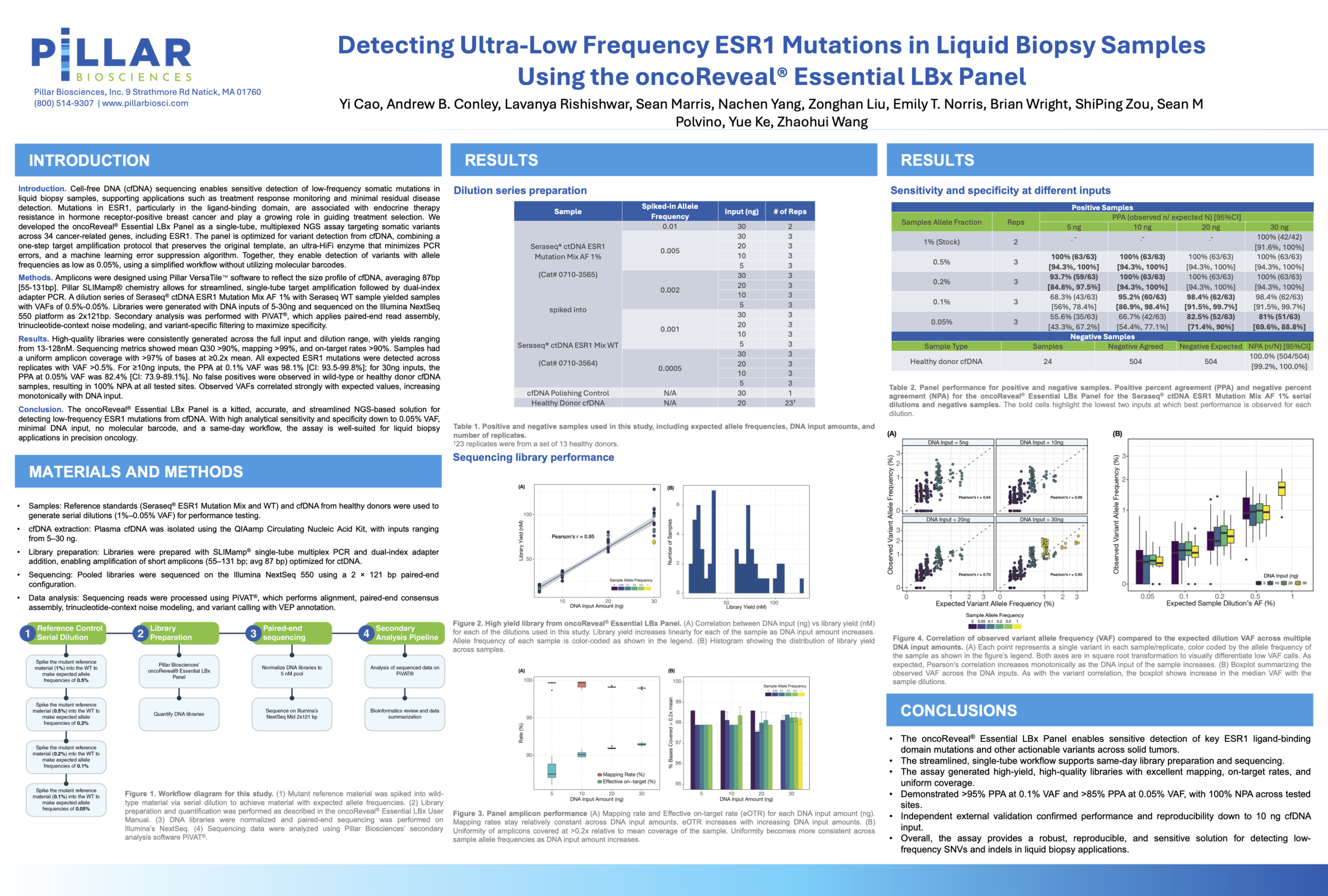
The oncoReveal® Essential LBx Panel is a single-tube, 34-gene amplicon-based NGS liquid biopsy assay built on SLIMamp® chemistry. Pillar tested it on Seraseq® ctDNA ESR1 reference standards diluted to 0.05% variant allele frequency (VAF) from 5–30 ng of plasma cell-free DNA (cfDNA), sequenced on the Illumina NextSeq 550 and analyzed with PiVAT® software. It detected these endocrine-therapy-resistance mutations in HR-positive breast cancer with 98.4% PPA at 0.1% VAF and 100% NPA — no molecular barcodes (UMIs) required.
Streamlined and Accurate Detection of Actionable Fusions with the oncoReveal Multi-Cancer RNA Fusion v2 Panel
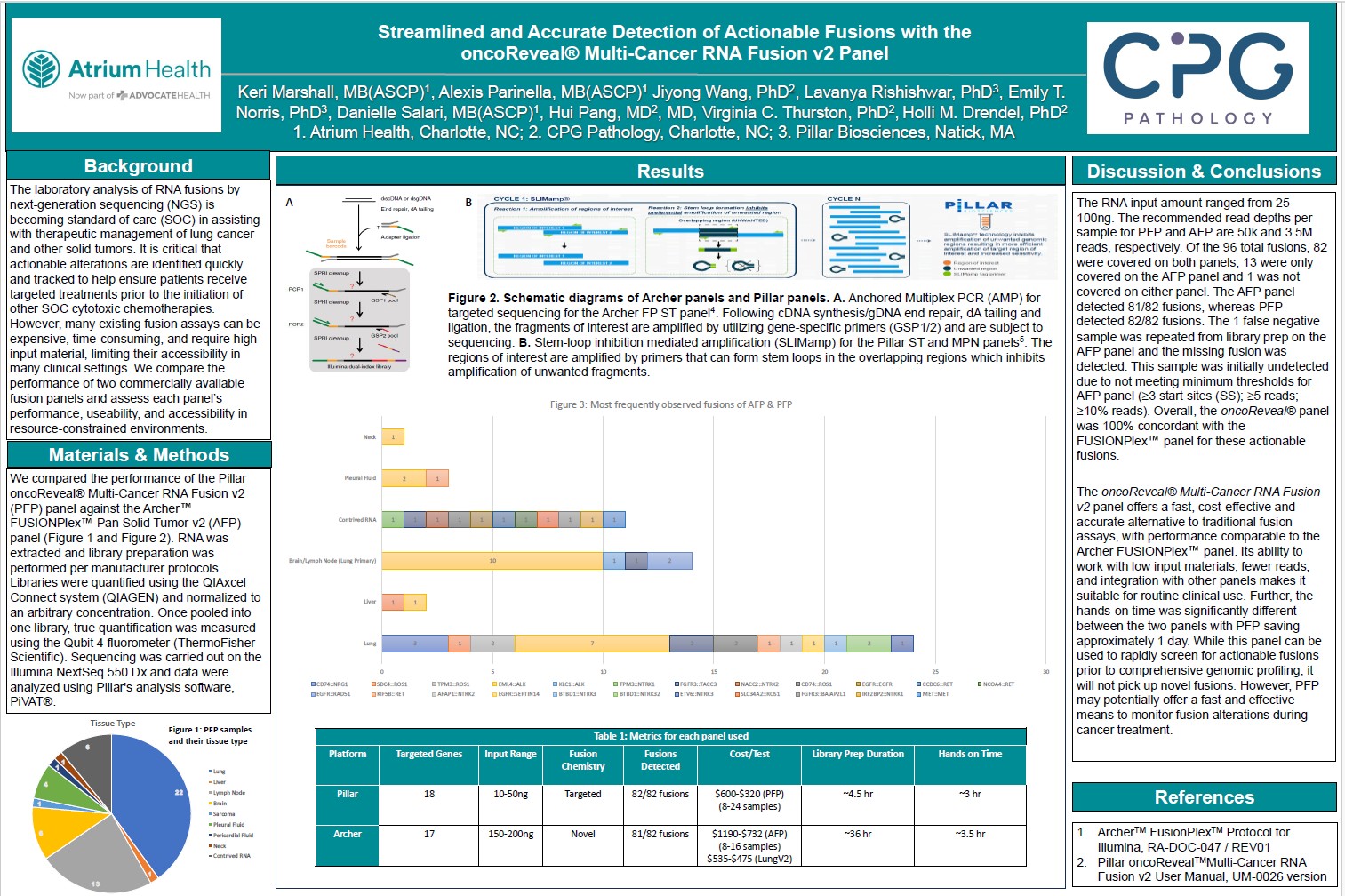
Atrium Health and CPG Pathology compared Pillar’s oncoReveal® Multi-Cancer RNA Fusion v2 panel against Archer’s FUSIONPlex Pan Solid Tumor v2 for detecting actionable gene fusions in lung and other solid tumors. RNA from 96 fusion-positive specimens — lung, liver, lymph node, brain, sarcoma, pleural and pericardial fluid — was prepared per protocol and sequenced on the Illumina NextSeq 550 Dx with PiVAT® analysis. Pillar detected 82 of 82 covered fusions, fully concordant with Archer, at roughly half the cost per test and with library preparation in 4.5 hours rather than 36.
Comparative Performance of Targeted and Comprehensive Somatic NGS Panels in Paired Tumor and Liquid Biopsy Samples from a Prospective Solid Tumor Cohort
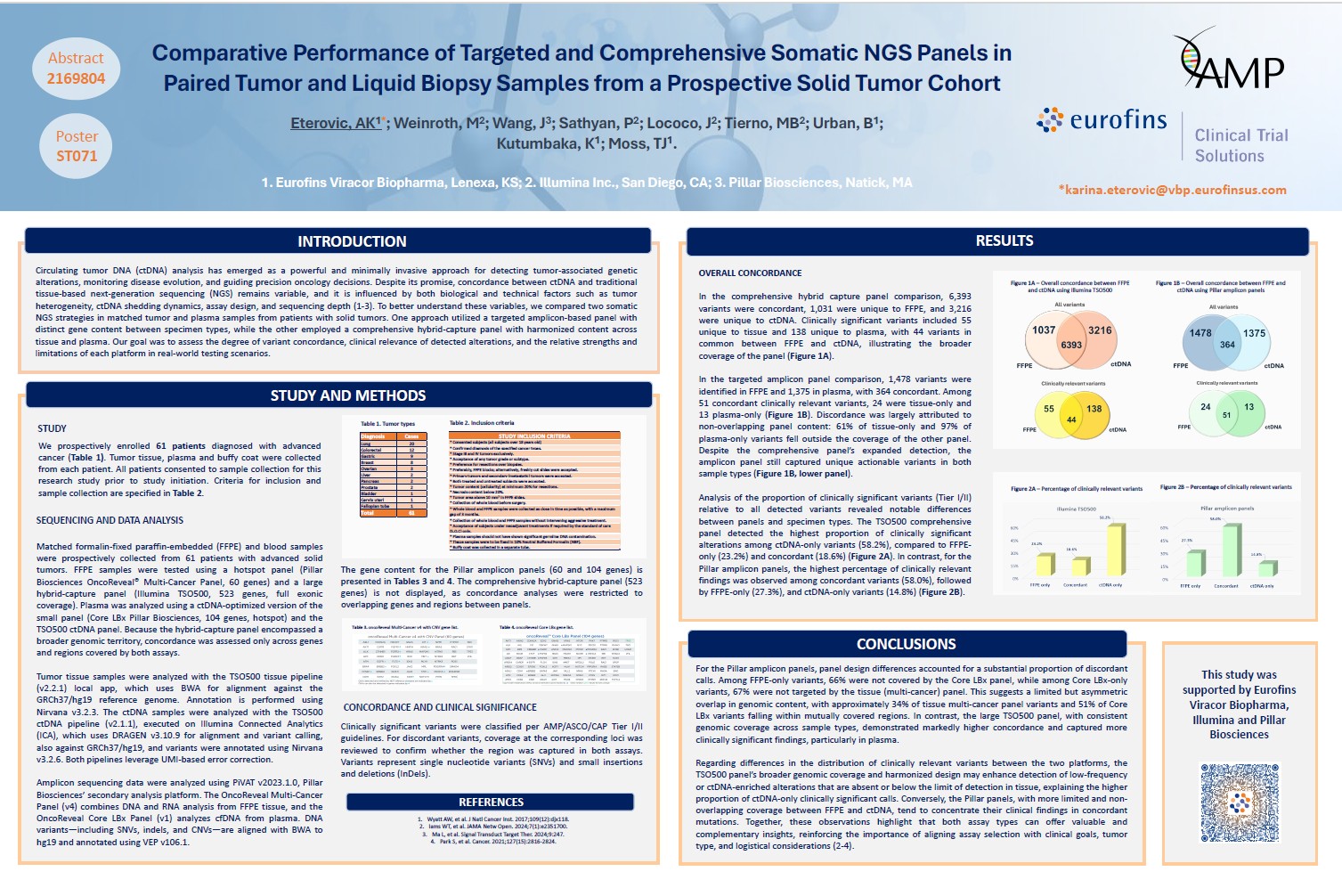
Eurofins Viracor Biopharma, with Illumina and Pillar, prospectively enrolled 61 patients with advanced solid tumors and tested matched FFPE tissue and plasma using Pillar’s amplicon panels (oncoReveal® Multi-Cancer, 60 genes, tissue; Core LBx, 104 genes, ctDNA) alongside Illumina’s TSO500 hybrid-capture panels (523 genes). The comprehensive panel showed higher tissue–plasma concordance, largely because its gene content is harmonized across specimen types while the Pillar tissue and liquid biopsy panels target different gene sets. Even so, 58.0% of Pillar’s concordant calls were clinically significant Tier I/II variants — the highest such proportion in the study.
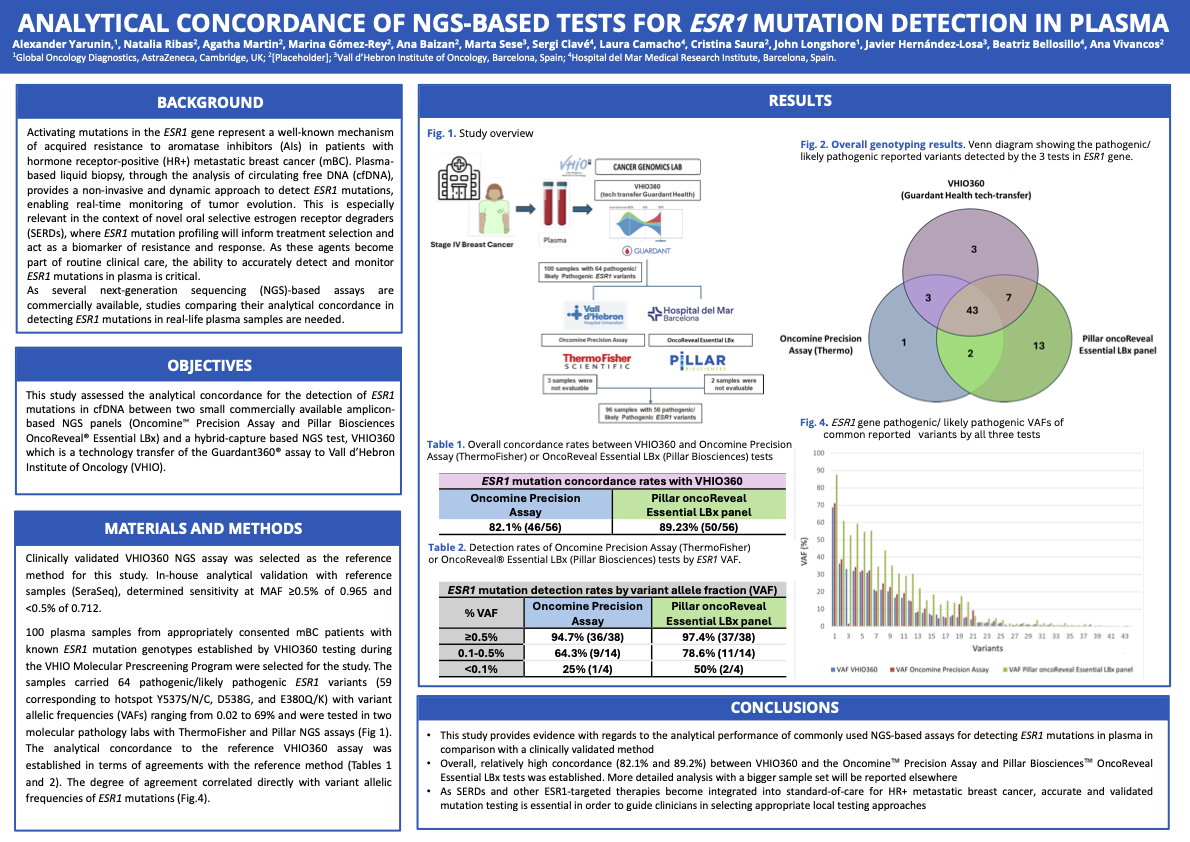
Analytical Concordance of NGS-based Tests for ESR1 Mutation Detection in Plasma