
Targeted NGS as a Front-Line Strategy to Accelerate the Delivery of Precision Medicine for Solid and Heme Tumors
Publishing Entity: GenomeWeb | Precision Medicine Online
TBC
The Simple Verifiation in a Molecular Pathology Lab of the FDA Approved oncoReveal CDx Pan-Cancer Solid Tumor IVD Assay
Event Name: AMP 2024
TBC
Leveraging Pillar Biosciences Targeted NGS Panels as a Rapid Front-Line Strategy to Inform and Accelerate the Delivery of Precision Medicine
Event Name: AMP 2024
TBC
Need for speed in solid tumor molecular testing
Publication Source: CAP TODAY
TBC
Validation of a Rapid Targeted Next Generation Sequencing Oncology Panel
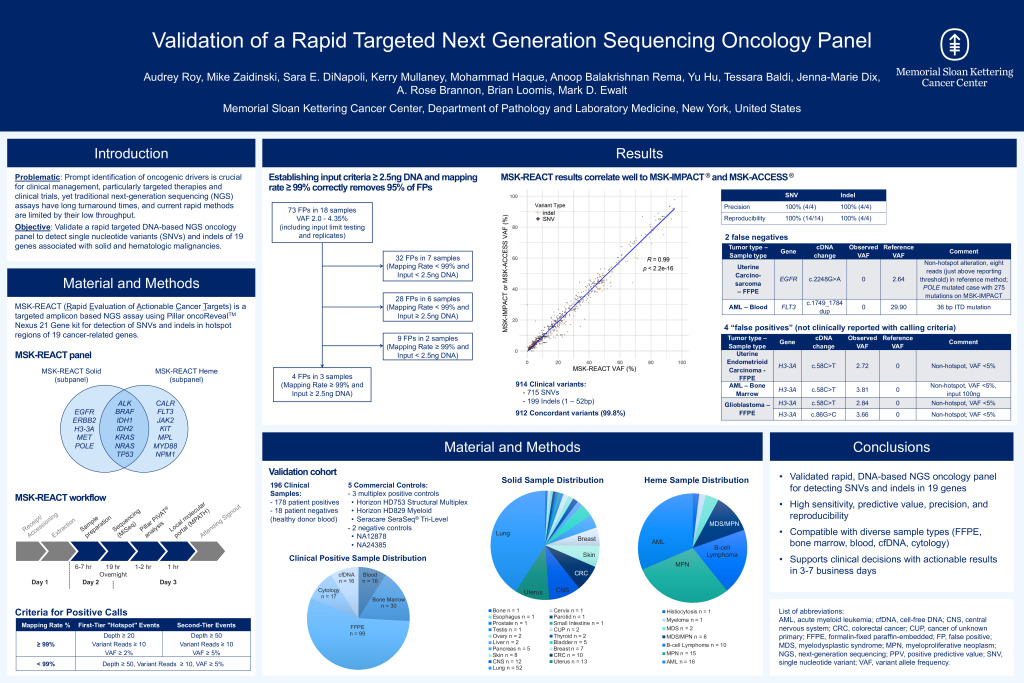
Memorial Sloan Kettering built MSK-REACT (Rapid Evaluation of Actionable Cancer Targets) on Pillar’s oncoReveal® Nexus 21 Gene kit, an amplicon NGS assay covering hotspot regions of 19 genes across solid and hematologic malignancies. Validation used 196 clinical samples — FFPE, bone marrow, blood, cytology, and cell-free DNA — plus five commercial controls, benchmarked against MSK-IMPACT® and MSK-ACCESS®. Of 914 clinical variants, 912 were concordant (99.8%), precision and reproducibility were both 100%, and actionable results are delivered in 3–7 business days.
Evaluation of the Pillar Biosciences oncoRevealTM Solid Tumor v2 (oRSTv2) Application on the Beckman Coulter Biomek NGeniuS System
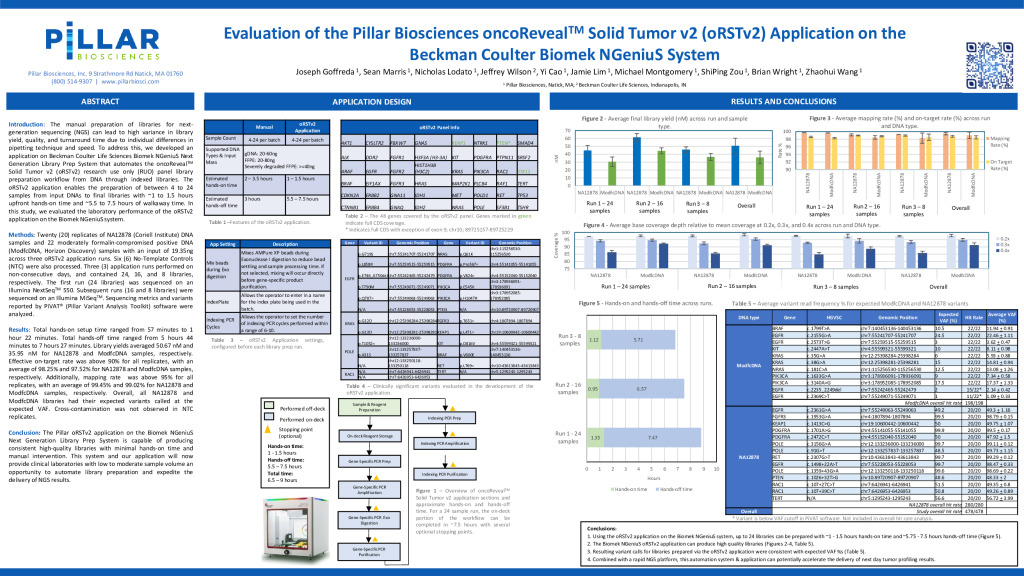
Pillar built and evaluated an automated application for its 48-gene oncoReveal® Solid Tumor v2 (oRSTv2) research-use panel on the Beckman Coulter Biomek NGeniuS library preparation system, taking DNA through to indexed libraries with minimal intervention. Twenty NA12878 replicates and 22 moderately formalin-compromised DNA samples at 19.35 ng input were processed across three runs of 24, 16, and 8 libraries, sequenced on Illumina NextSeq 550 and MiSeq with PiVAT® analysis. Every expected variant was called at its expected allele frequency — 478 of 478 across the study — with no cross-contamination in no-template controls.
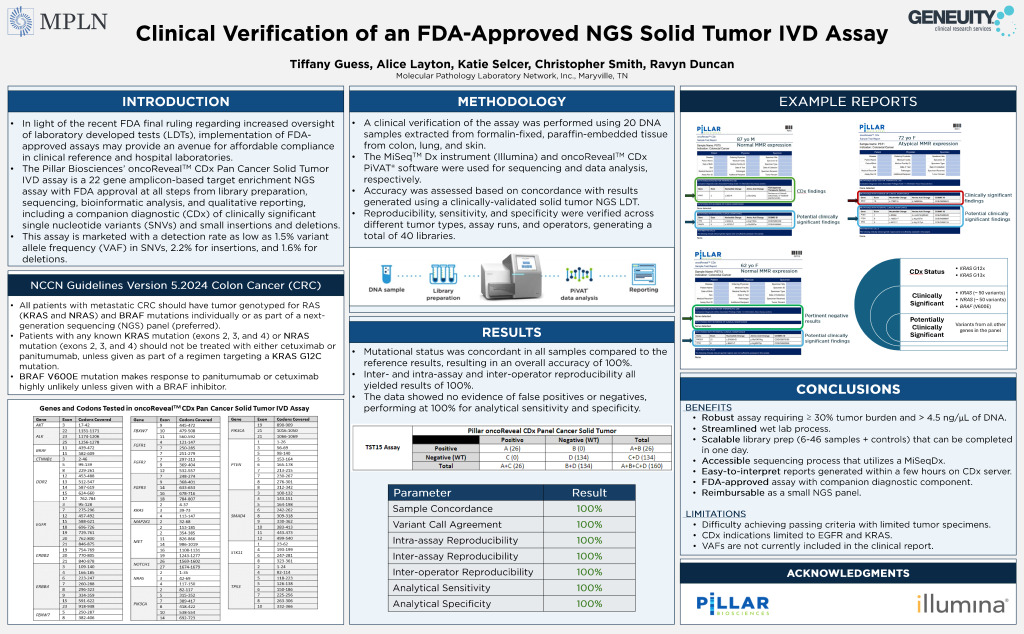
Clinical Verification of an FDA-Approved NGS Solid Tumor IVD Assay
Evaluation of the QIAxcel Connect system for NGS library prep QC analysis: experience from a clinical diagnostic laboratory
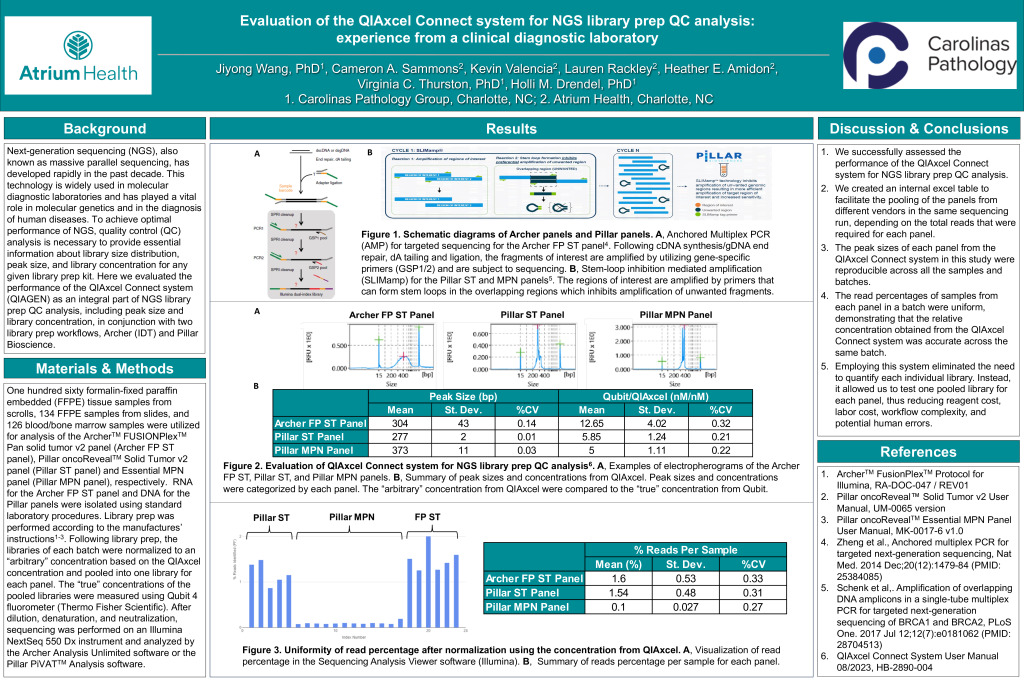
Carolinas Pathology Group and Atrium Health evaluated the QIAGEN QIAxcel Connect system for library quantification and quality control across three NGS workflows: Archer’s FUSIONPlex Pan Solid Tumor v2, Pillar’s oncoReveal® Solid Tumor v2, and Pillar’s oncoReveal® Essential MPN panel. Libraries from 160 FFPE scrolls, 134 FFPE slides, and 126 blood or bone marrow specimens were normalized on QIAxcel concentrations, pooled per panel, and sequenced on the Illumina NextSeq 550 Dx. Pillar panels showed the tightest peak-size reproducibility, and the approach removed the need to quantify every individual library.
Automation of oncoReveal Solid Tumor 22 Gene Panel and the Illumina TruSight Oncology 500 DNA/RNA
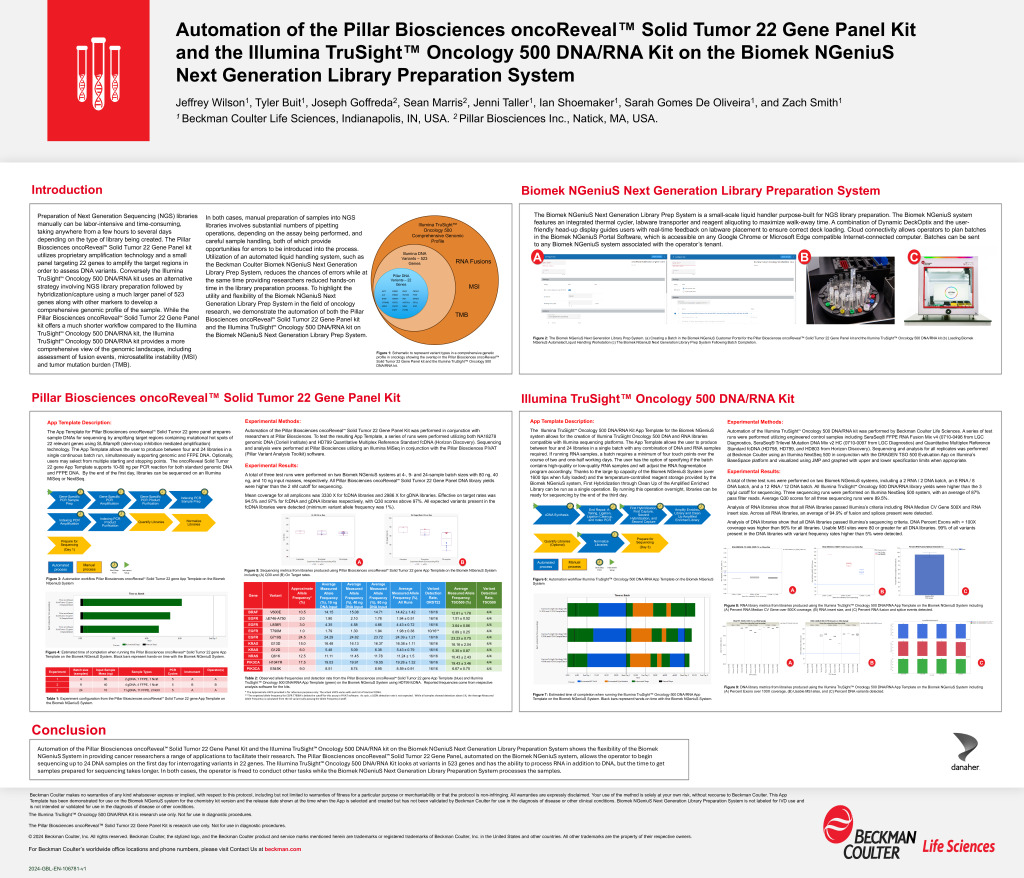
Beckman Coulter Life Sciences automated both Pillar’s oncoReveal® Solid Tumor 22 Gene Panel and Illumina’s TruSight Oncology 500 DNA/RNA kit on the Biomek NGeniuS library preparation system to reduce manual pipetting and hands-on time. Three test runs per assay used engineered controls including Horizon Discovery fcDNA and SeraSeq® reference standards, sequenced on Illumina MiSeq and NextSeq 500 and analyzed with PiVAT® and DRAGEN. The Pillar panel reached sequencing by the end of day one at batch sizes from 4 to 24 samples, while the 523-gene TSO500 workflow ran into day three.
Automation of the Pillar Biosciences oncoReveal Solid Tumor 22 gene panel (ORST22) on the Biomek NGeniuS Next Generation Library Prep System
Pillar built and evaluated an automated application for its 48-gene oncoReveal® Solid Tumor v2 (oRSTv2) research-use panel on the Beckman Coulter Biomek NGeniuS library preparation system, taking DNA through to indexed libraries with minimal intervention. Twenty NA12878 replicates and 22 moderately formalin-compromised DNA samples at 19.35 ng input were processed across three runs of 24, 16, and 8 libraries, sequenced on Illumina NextSeq 550 and MiSeq with PiVAT® analysis. Every expected variant was called at its expected allele frequency — 478 of 478 across the study — with no cross-contamination in no-template controls.